Project Type
Product Design
Industry
Motorbike Track Racing
Track Racing Motorcycle TFT Device Redesign
Overview
Track racing demands interfaces that deliver critical information instantly, without distracting the rider. This project explored how motorcycle racers process data at high speeds, focusing on cognitive load, peripheral vision, and situational awareness in real racing conditions while also adding more functionality to the Thin-Film Transistor (TFT) itself for more functionality off the track and more focus on post race recovery and analysis for a more impactful racing experience.
Problem
Track Racers have to make split-second decisions while needing to know if their bike has more in it to push the limit and break personal records.
This is where most TFT's fail to rise to the challenge by not specializing in
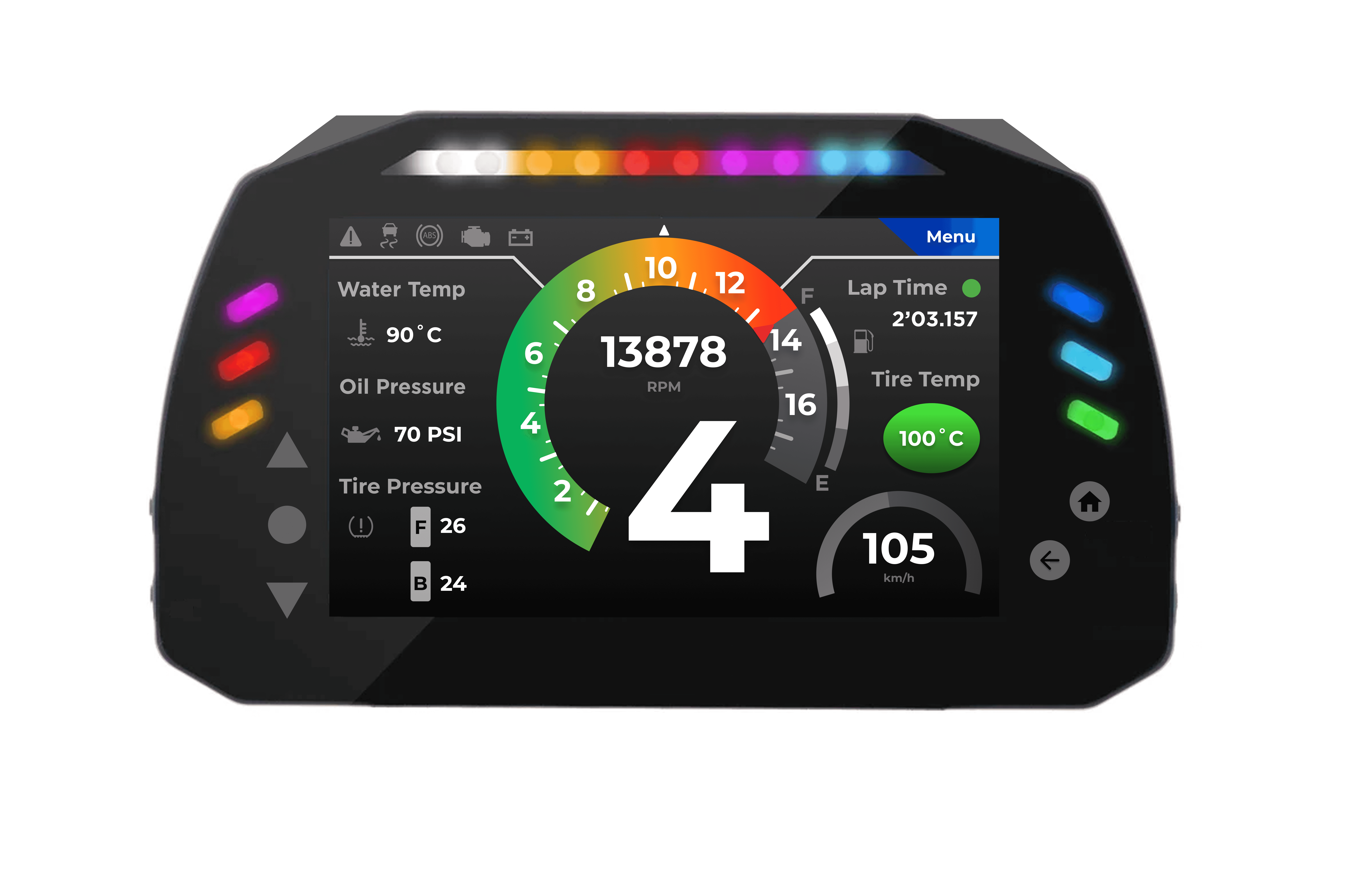
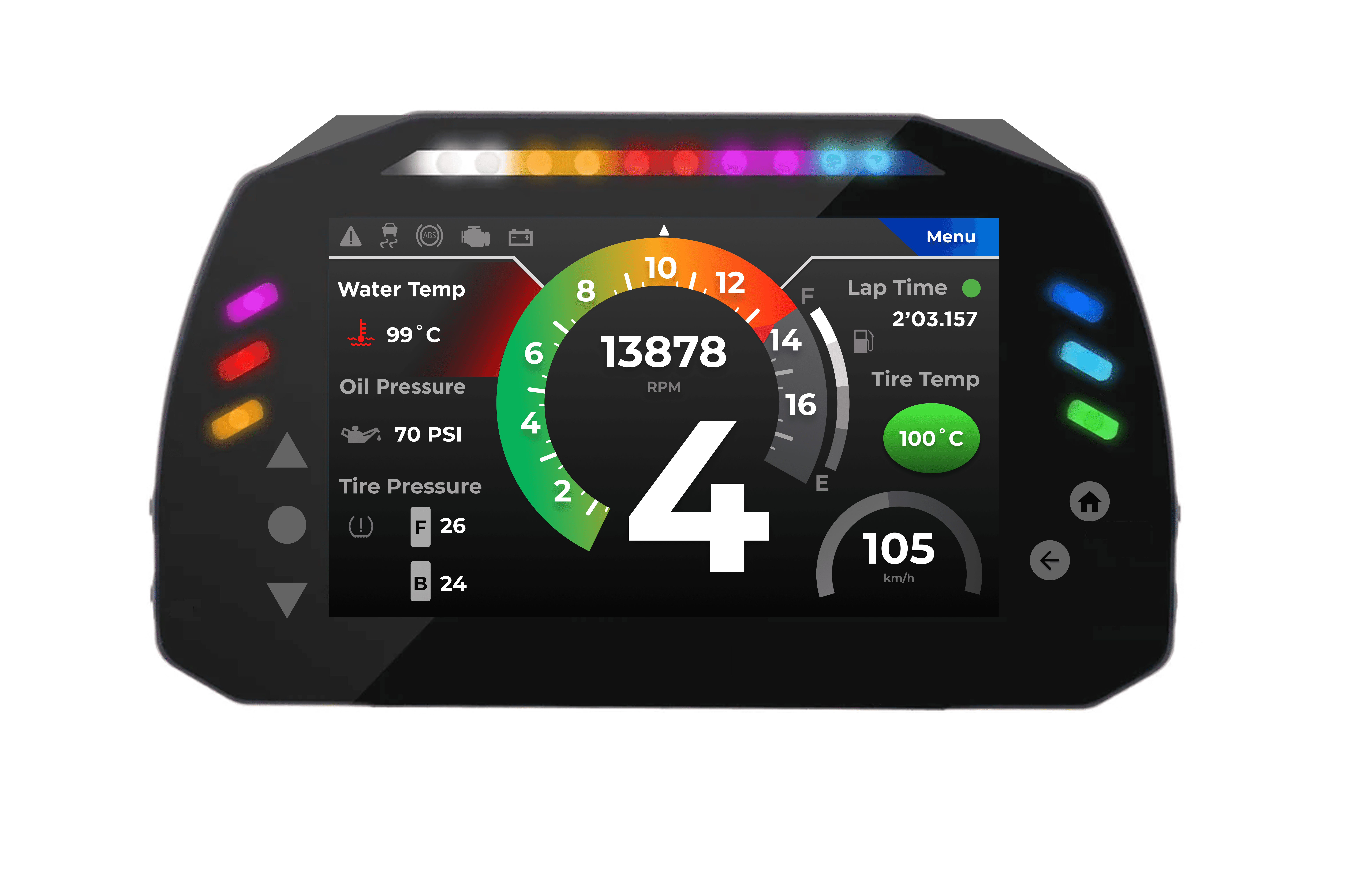
Clear Hierarchy and Clarity: The most important information when racing can get over shadowed by clutter and moving parts that can lead to confusion
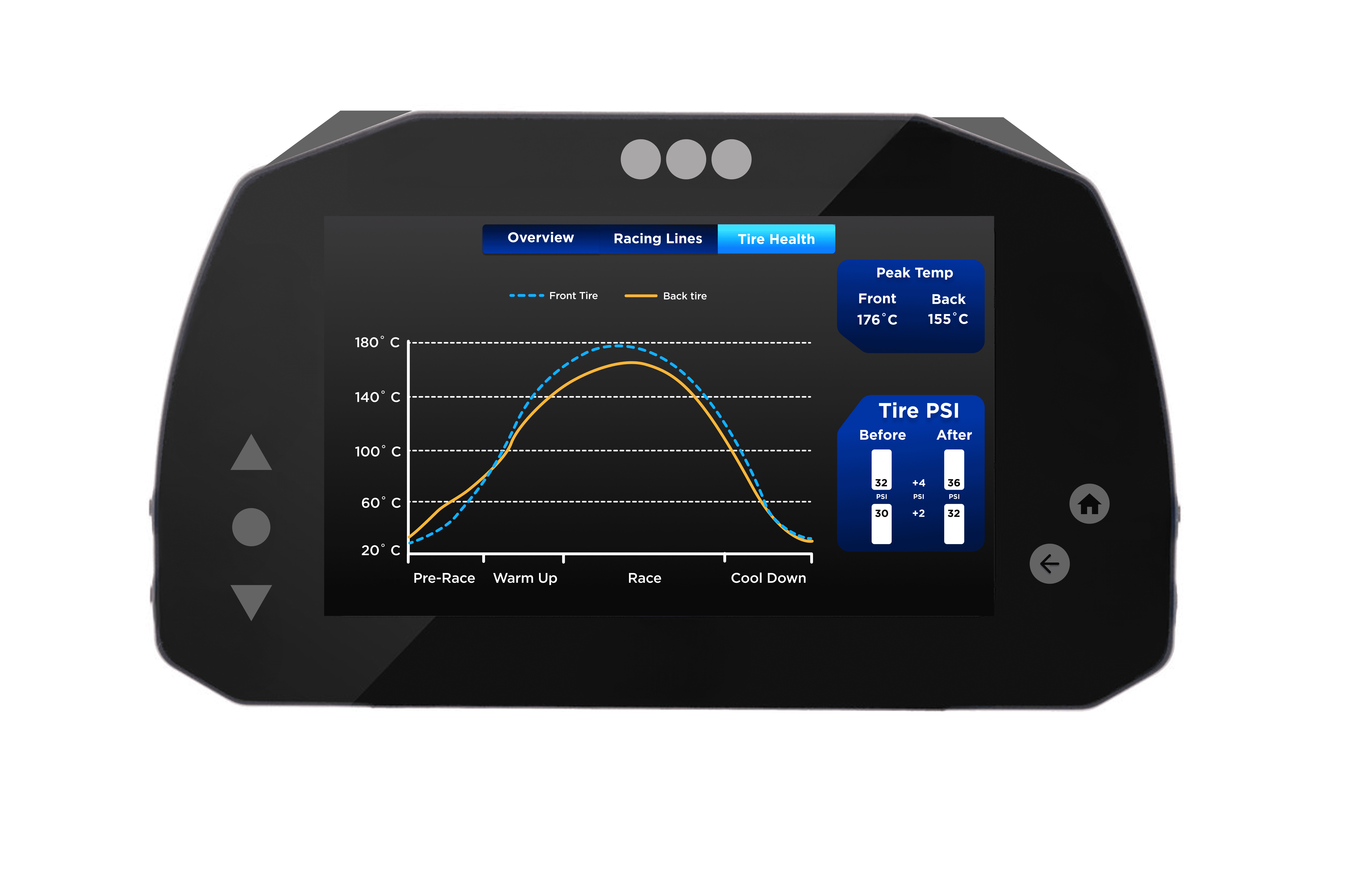
Always-Visible Tire Conditions: Allows racers to know how well or bad their tires are in an instant to inform grip, braking confidence, and when riders can safely push performance limits
Post Race Analysis: After racing, riders lack immediate, focused access to performance data, making it difficult to reflect on laps, identify mistakes, and translate effort into actionable improvement while the experience is still fresh.
Market Analysis
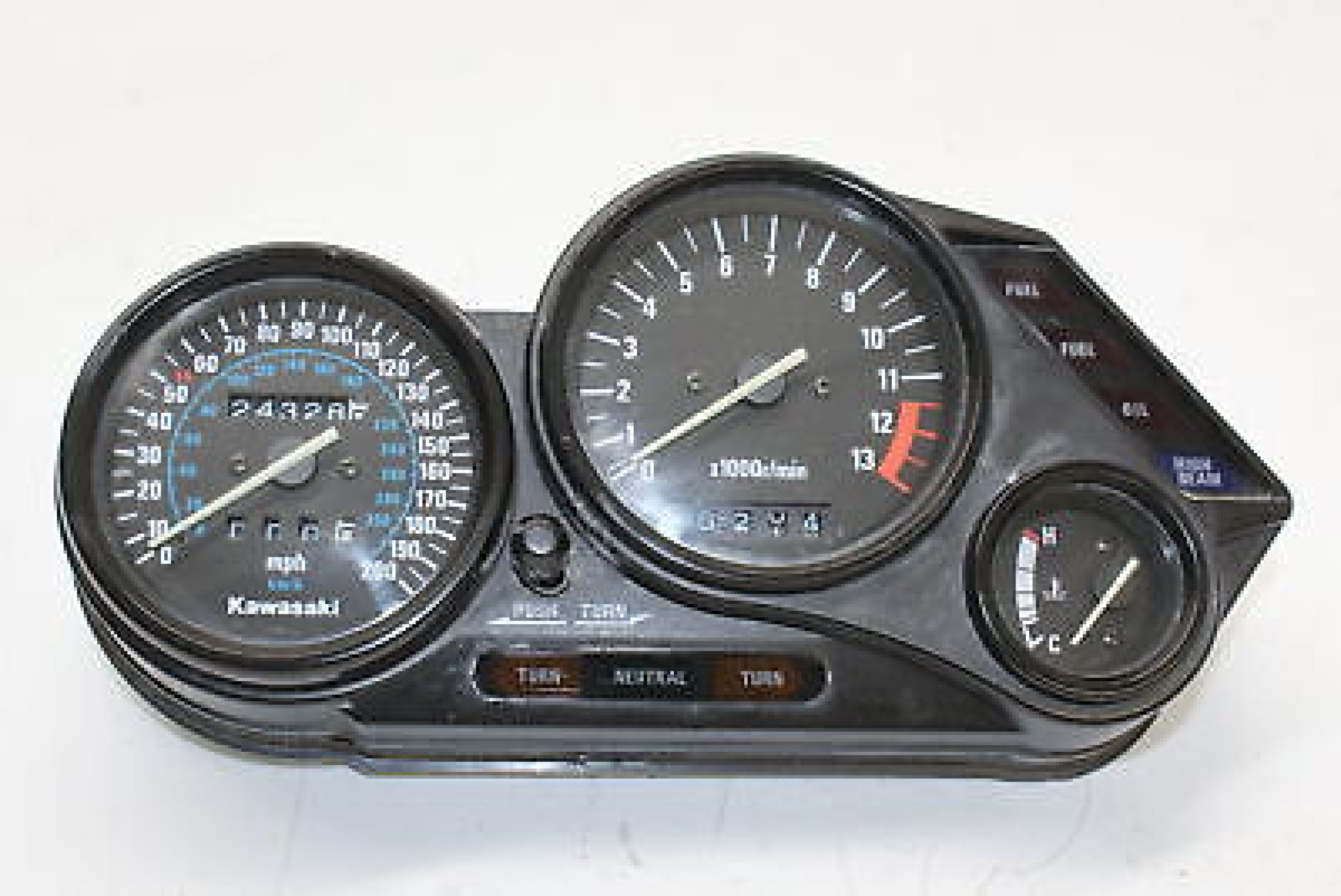
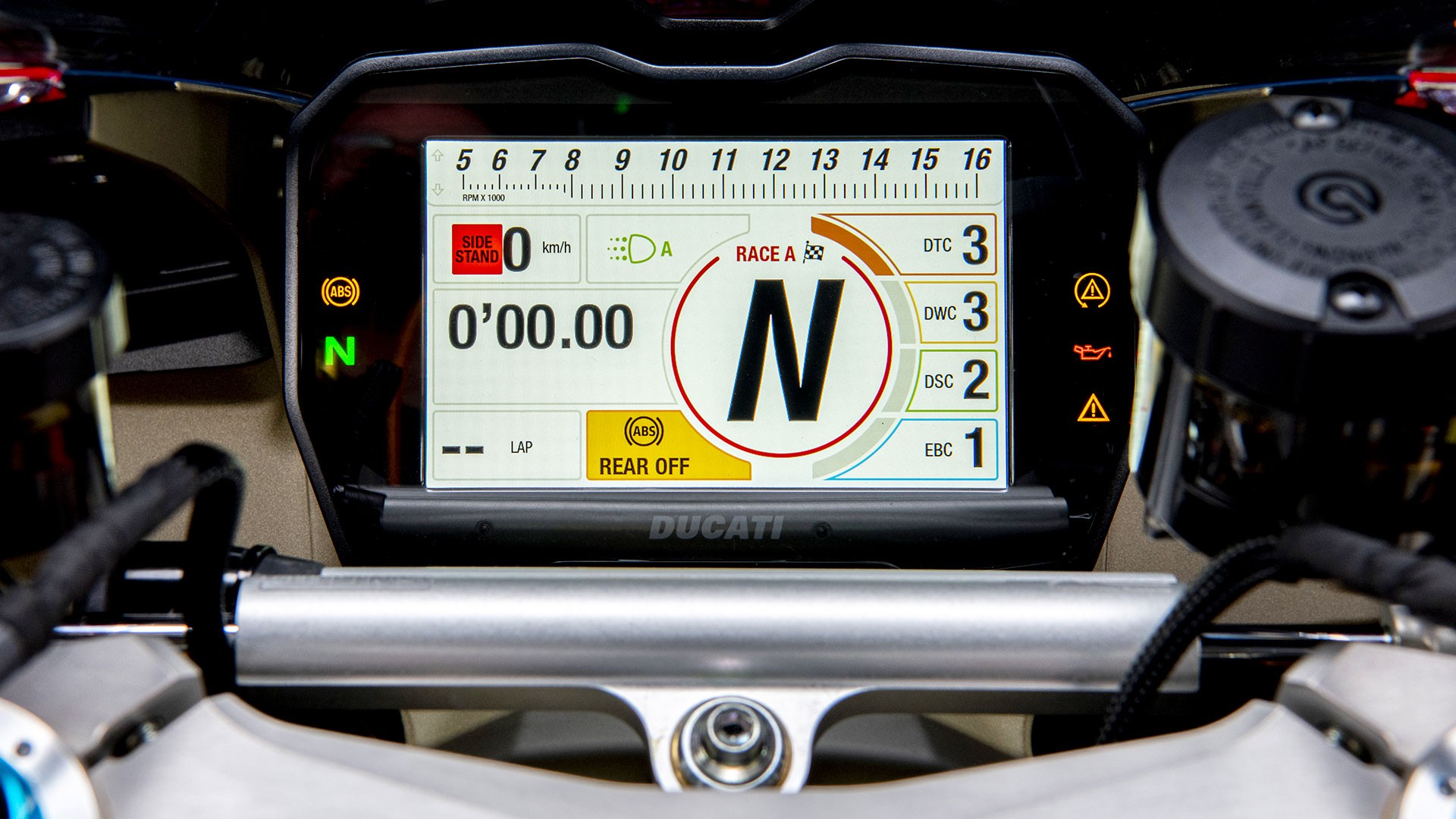
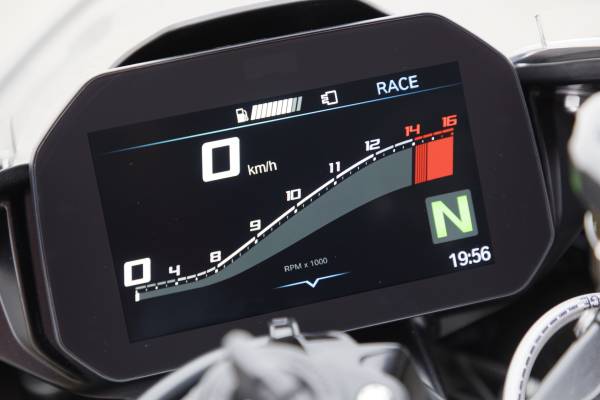
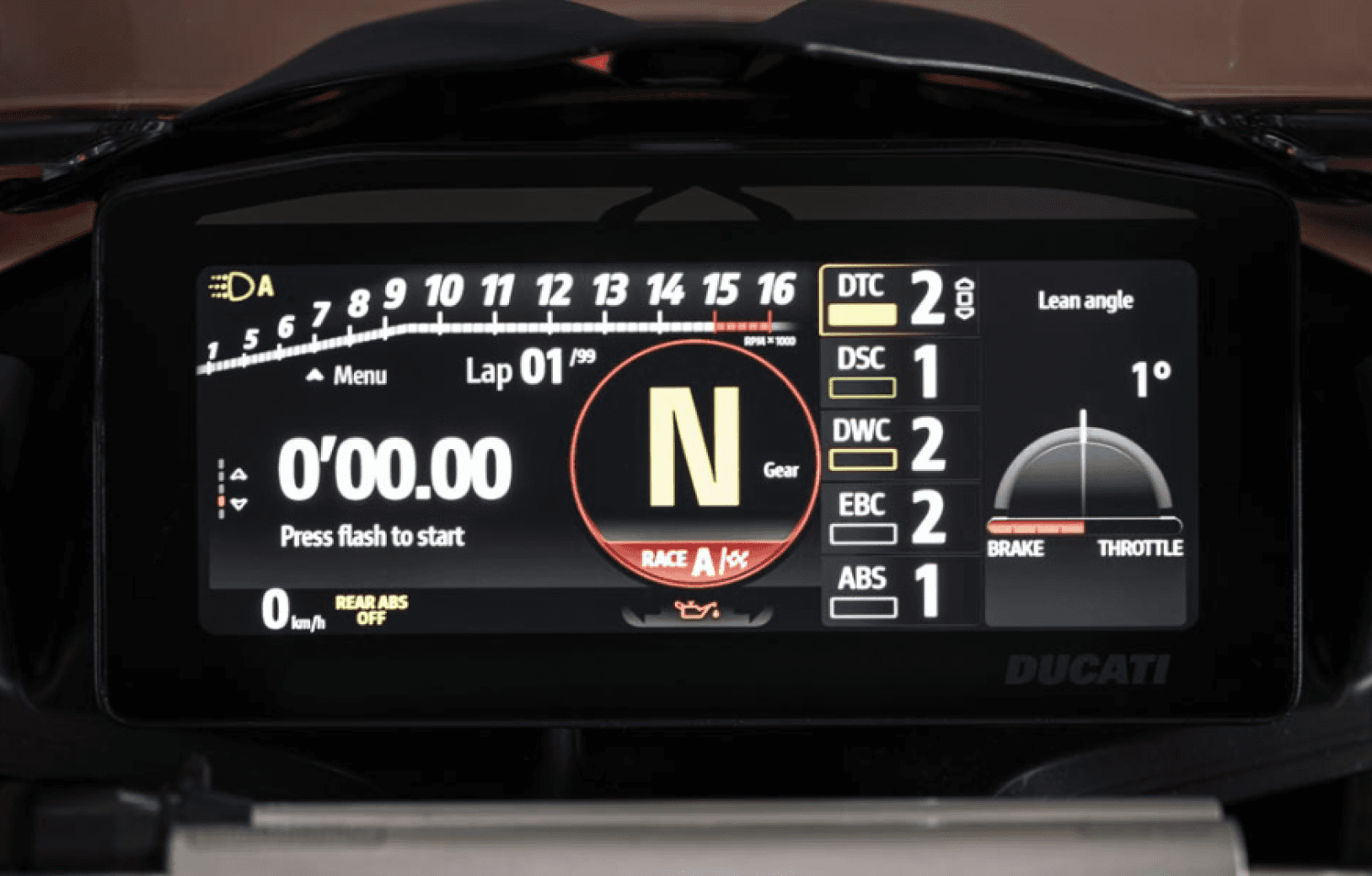
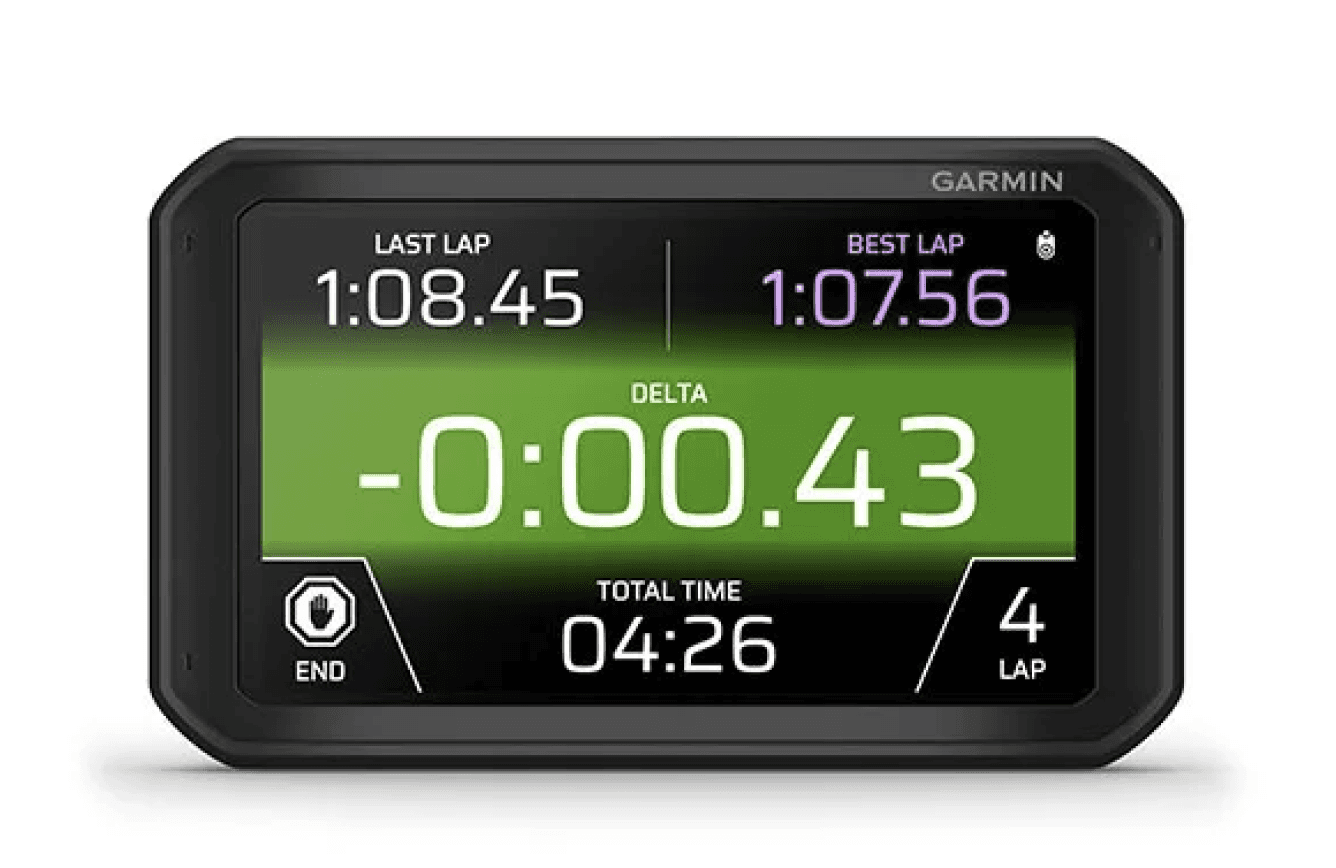
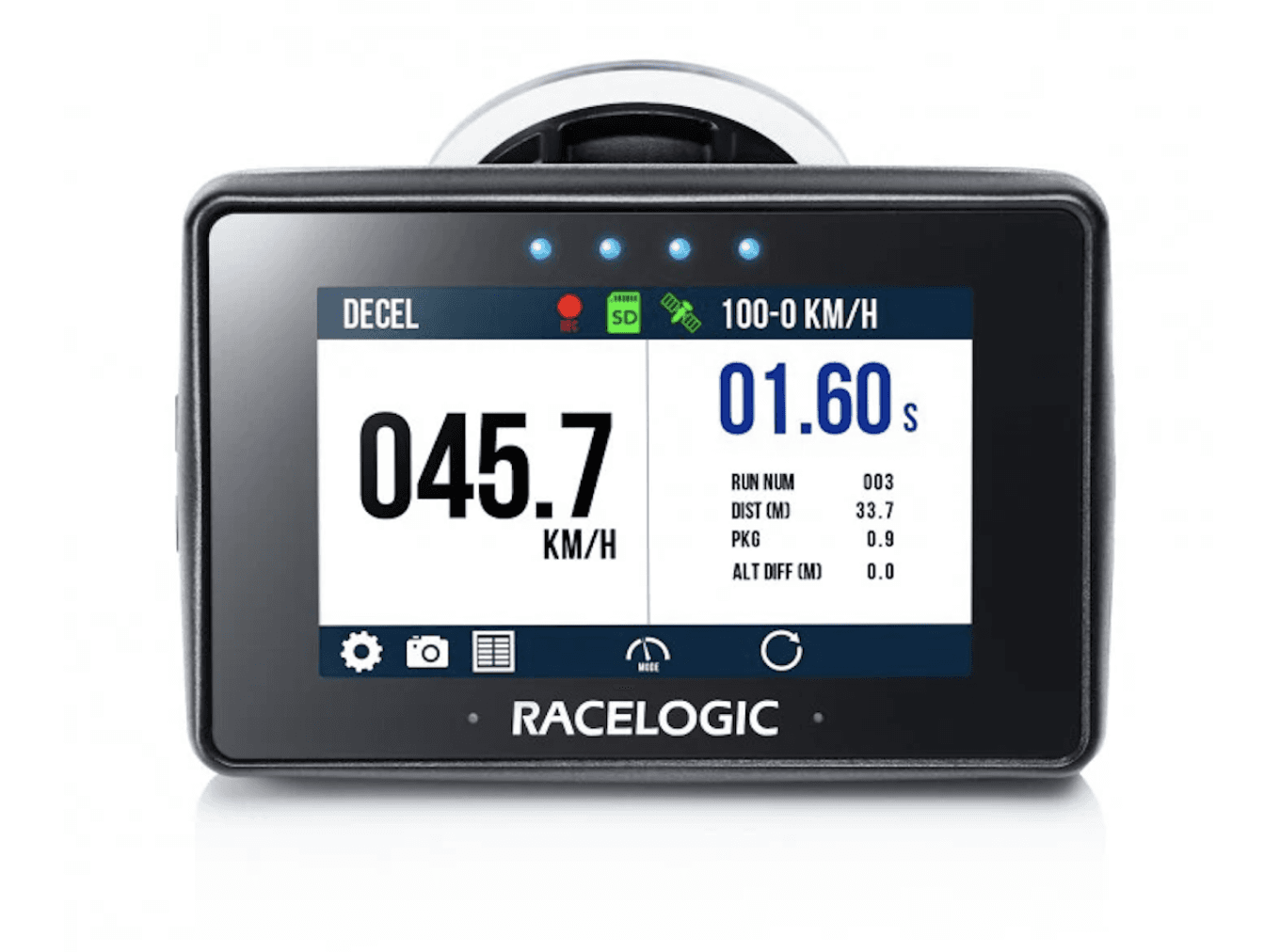
The market is full of variety for specific styles of driving and what each rider prioritizes in their racing experience on the track and these are just a few of the other TFT's on the market that lack in the categories mentioned above
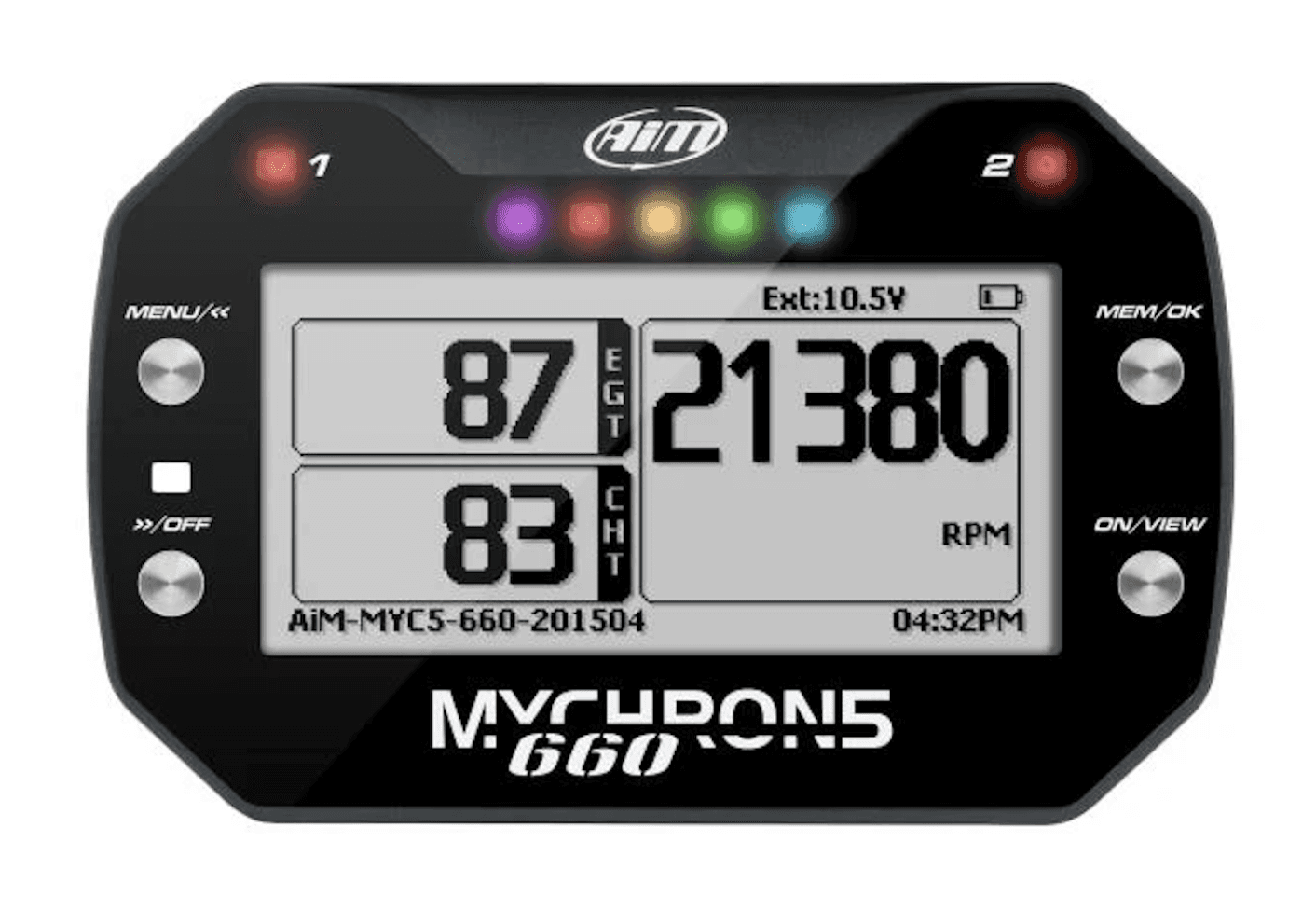
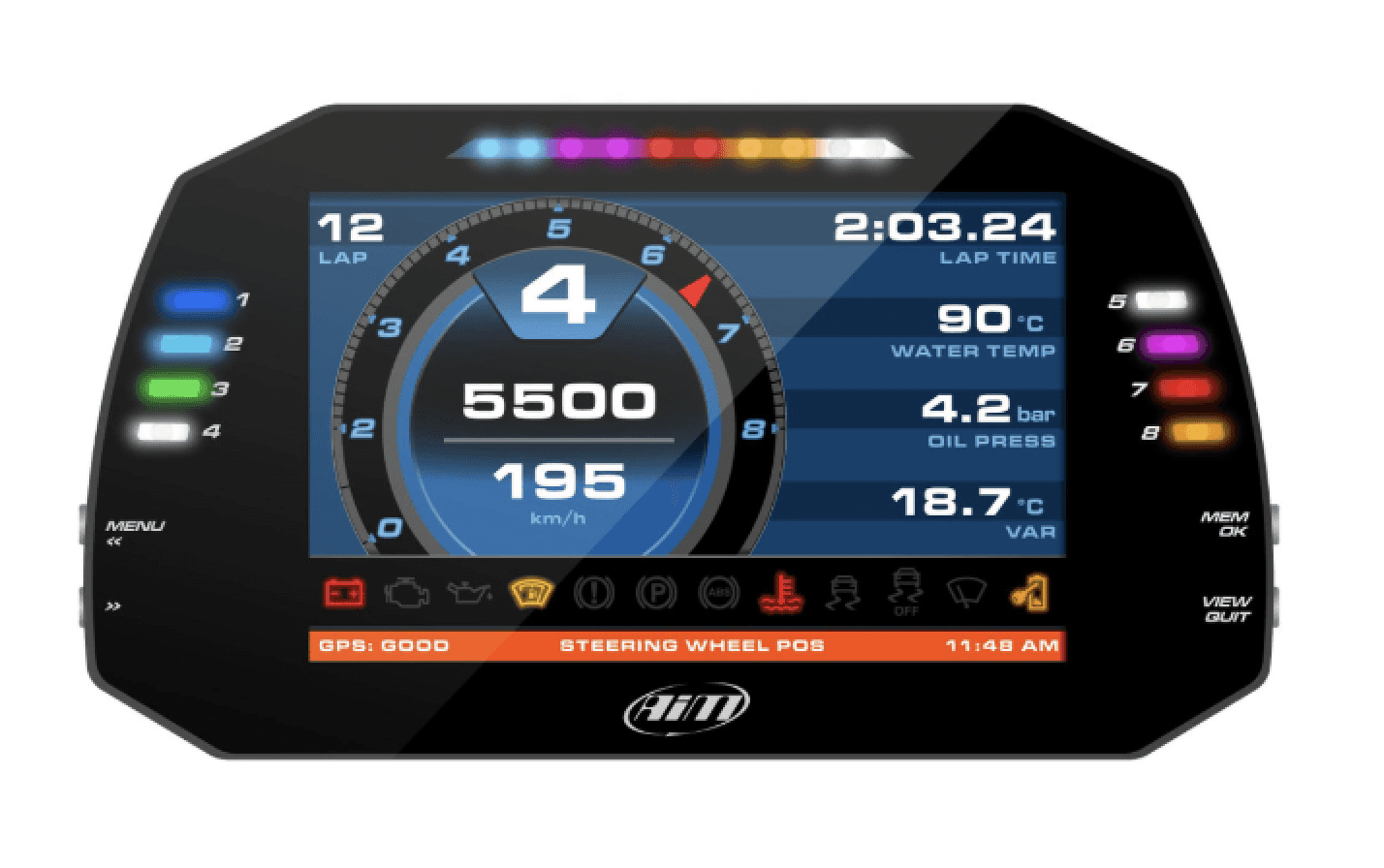
The Research
What the Riders Said
Through interviews with riders both in person and across online communities, I gathered firsthand perspectives on what makes the racing experience feel more comfortable while also improving performance and confidence during and after a race. Below are a few of the most mentioned things that riders believe to be what is wrong with today's TFT devices
Analog or Digital?
A big thing that I was debating after reading responses from riders was that a lot of users really enjoyed analog tachometers vs digital because they enjoyed the peripheral view of the analog vs digital.
I decided to go forward with the digital tachometer because I really wanted to dive into the post race analytics that excites riders and make it feel more personal to them so I believed that sacrificing analog for digital was a fair trade for more durability and usability for the user post race.
Hard to see In Sunlight
When racing gets intense and the rider needs to see their dash, the sun shouldn't be able to affect the race
Lack of Important Info
When vital information such as tire health can make or break a race, it should be on screen about 100% of the time
Lack of Post Race Analysis
In-Depth analysis after racing takes too long to see, losing vivid memory of the race
The Process
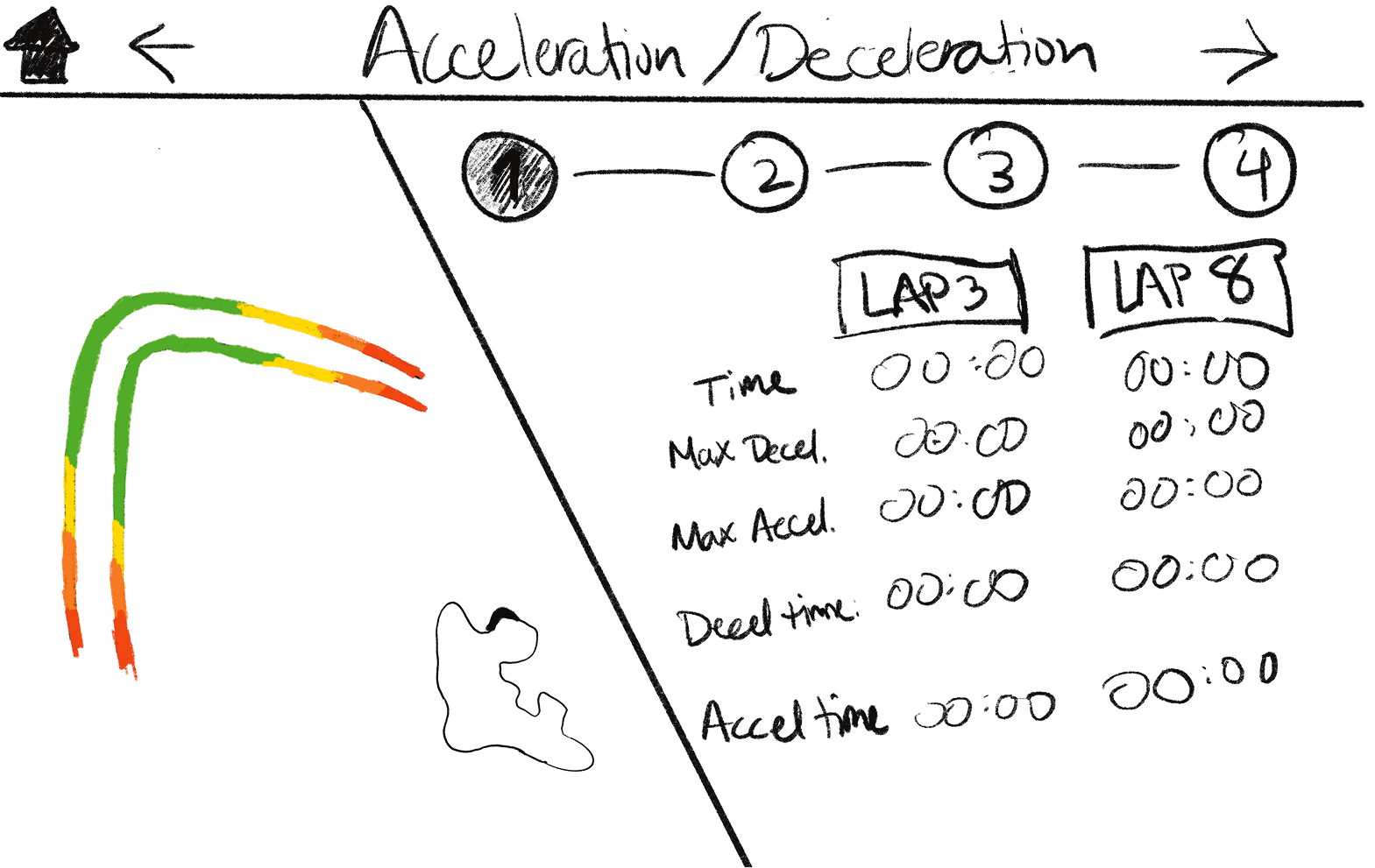
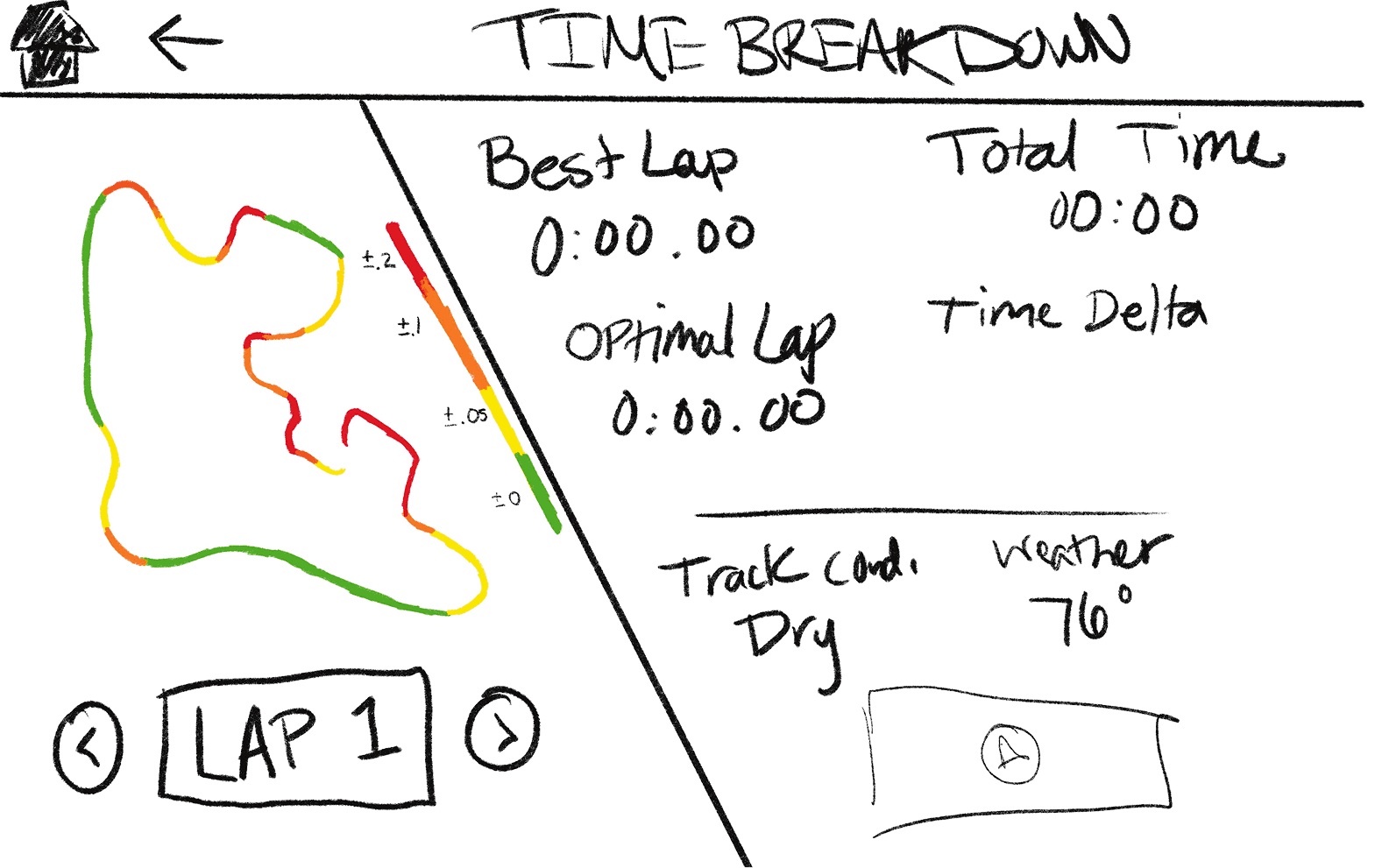
The design process was deeply rooted in the research that after the vast amount, I was prepared to go into the wireframing and started with some sketches to just get some ideas on paper for what this functioning TFT could look like.
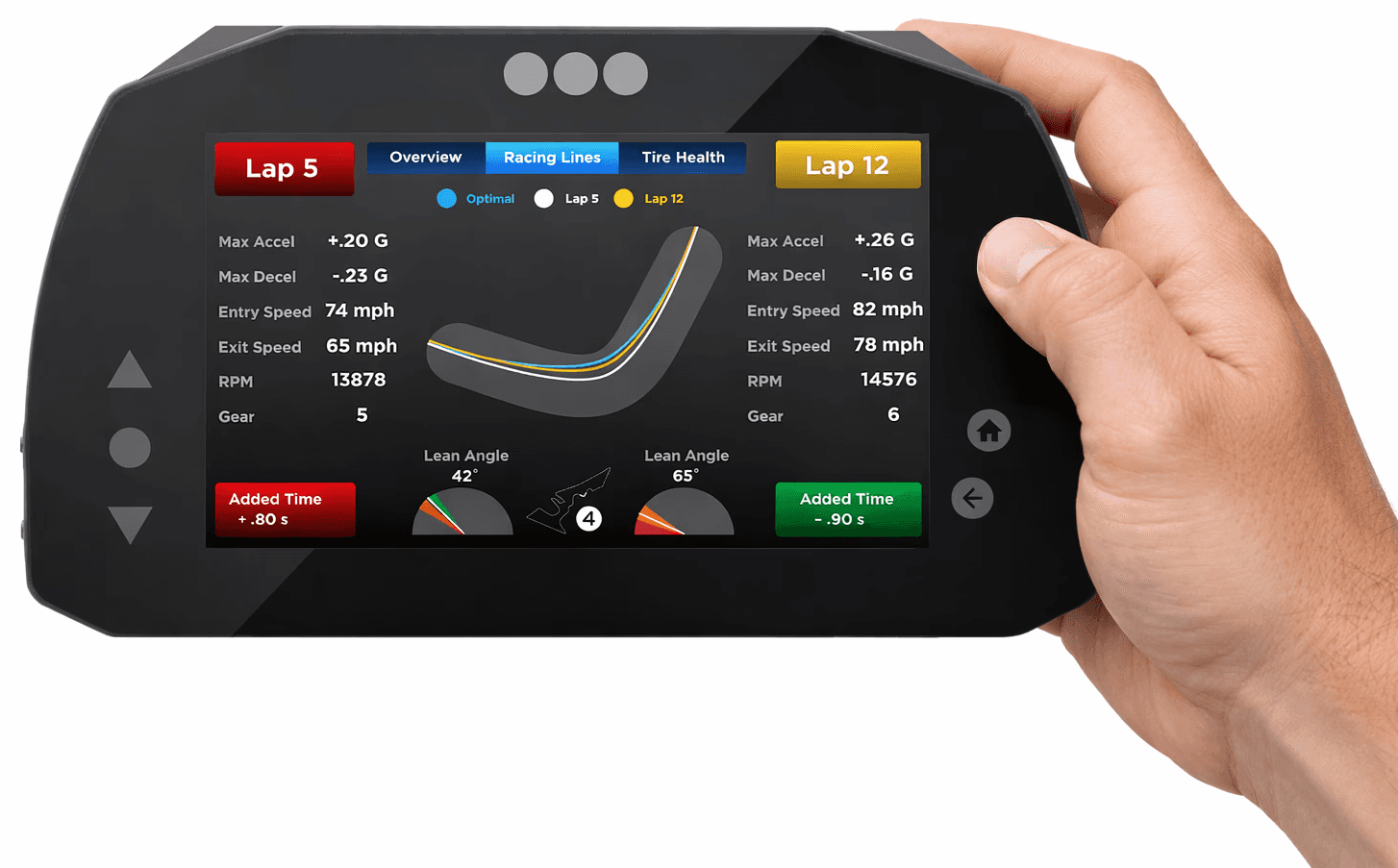
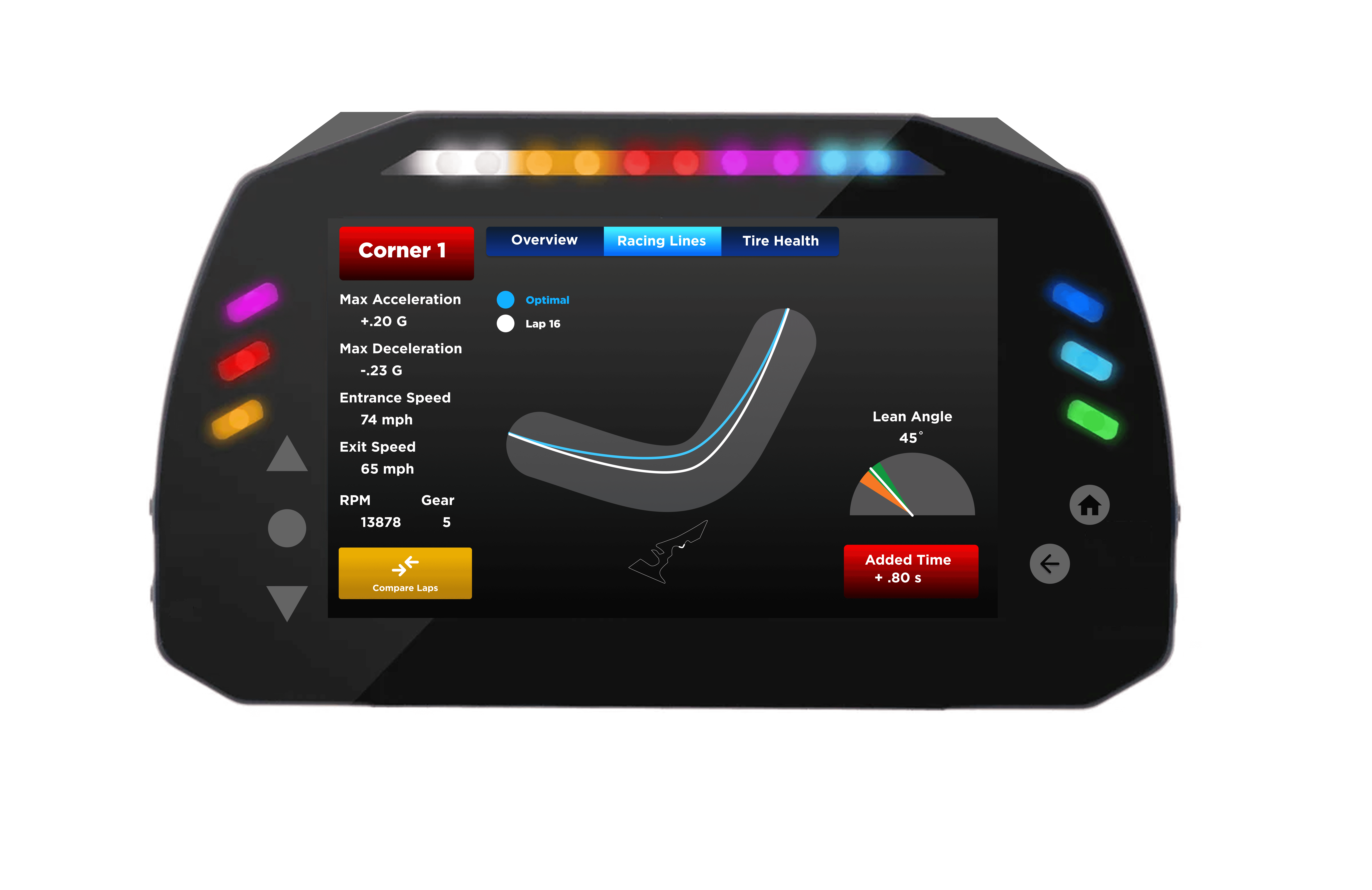
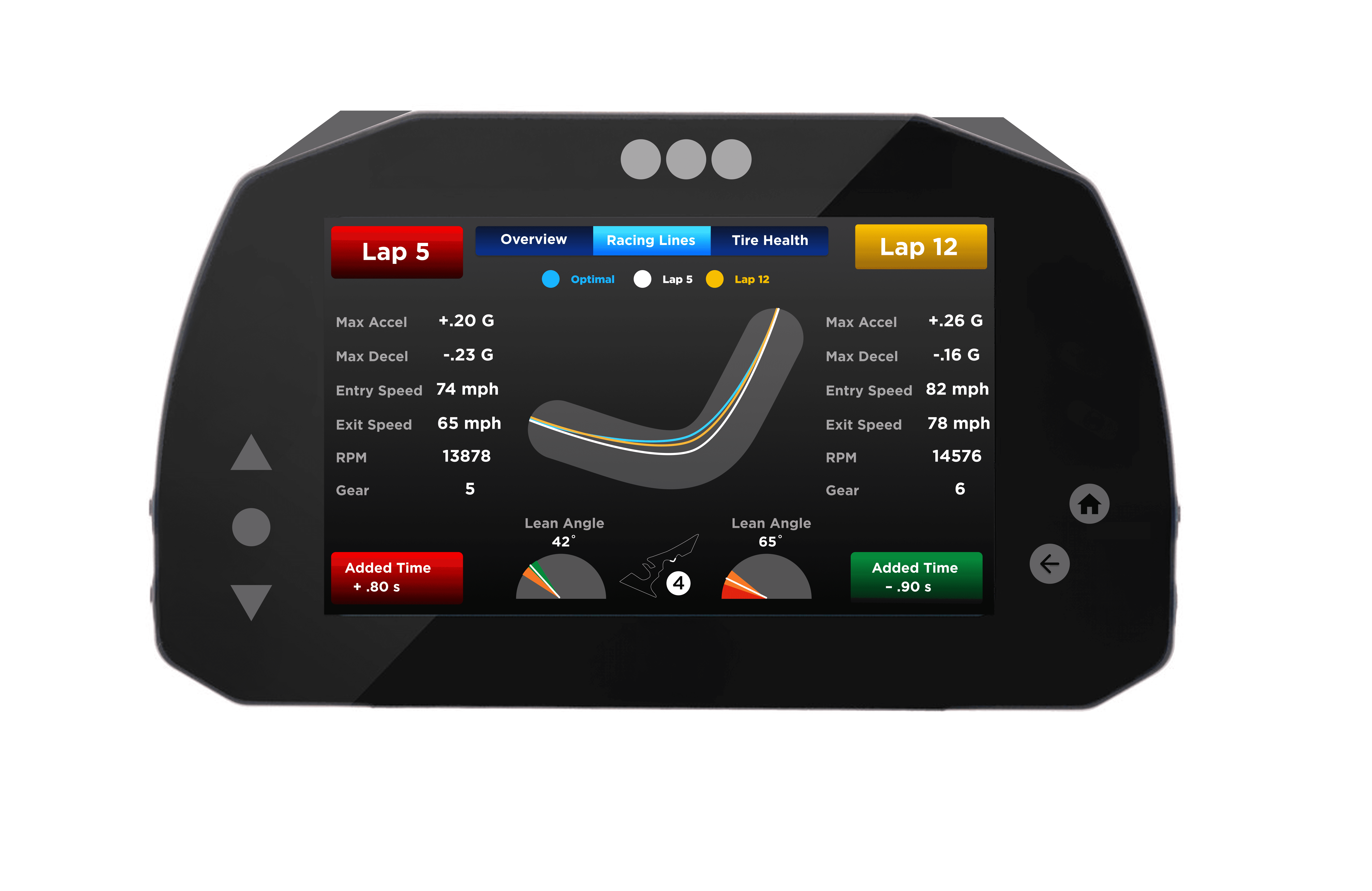
I placed a strong emphasis on post-race analysis, designing the experience to enhance performance metrics that allow riders to identify small, actionable improvements and push toward new personal records.
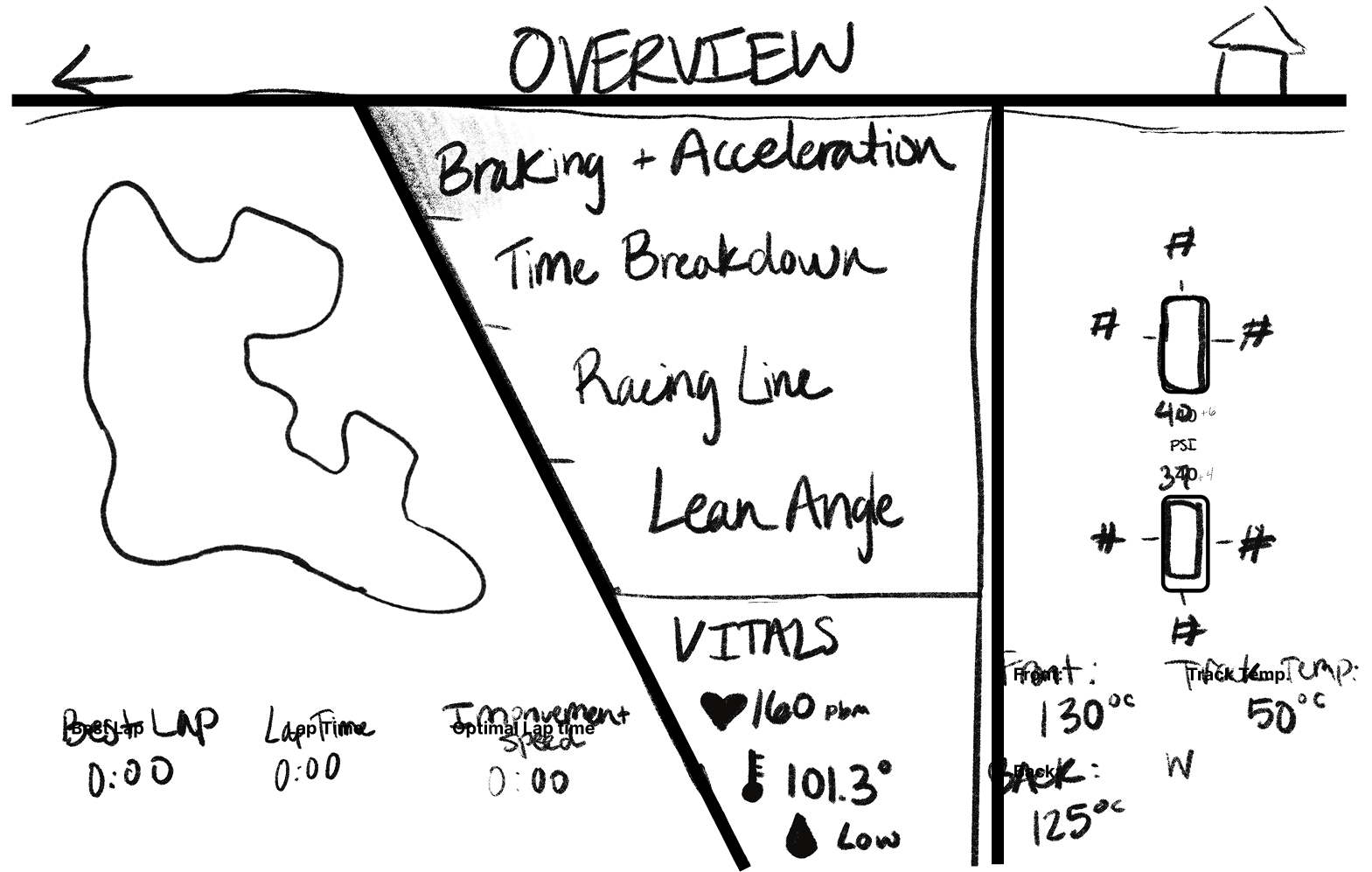
First Wireframe Sketches:
Wanted to just really focus on how I was going to be able to fit so much information for the rider on one screen post race so I made this overview screen that led to more categories of stats and times for the rider
Second Ideations:
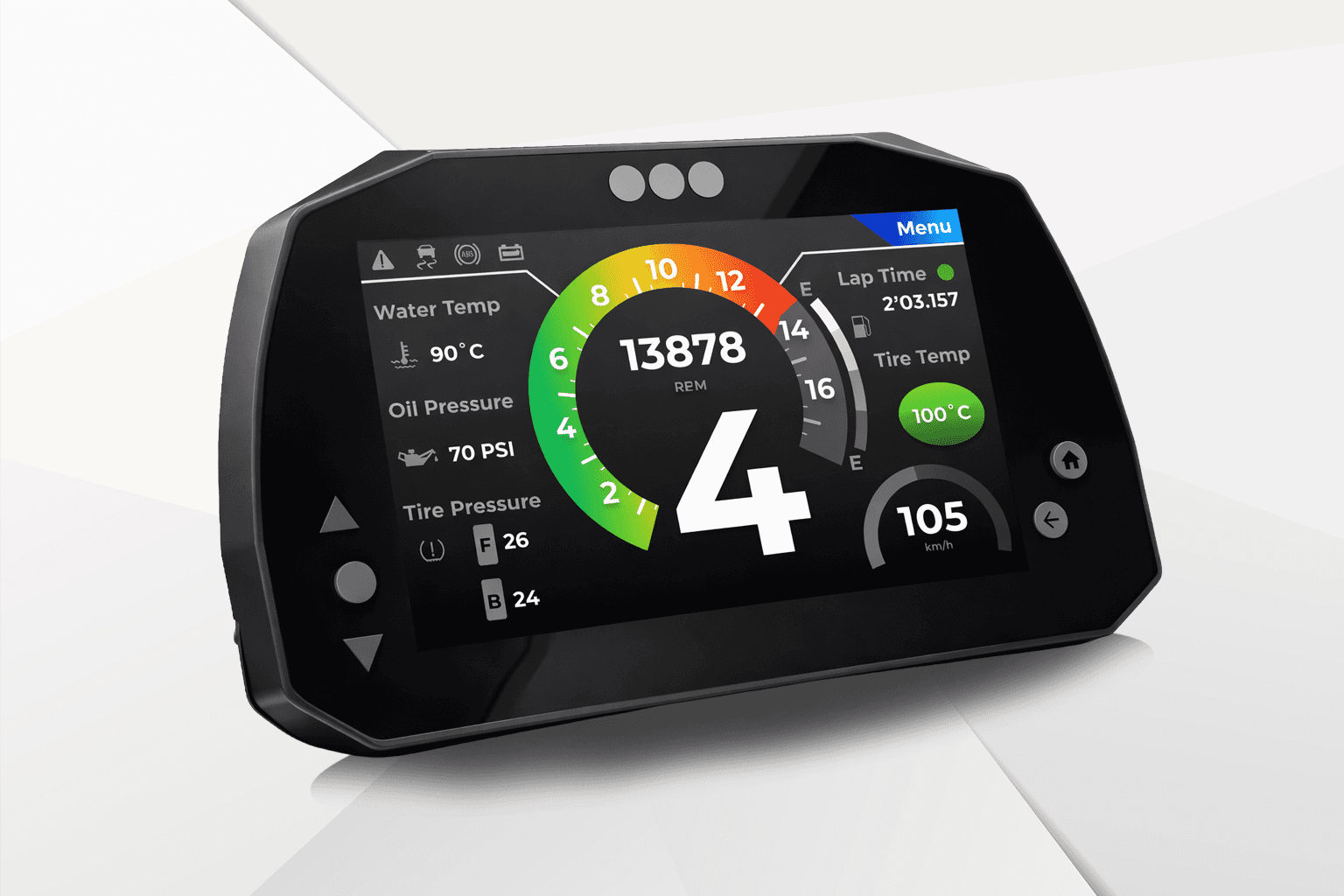
I wanted to focus on simplicity and organization by making the selectable choices vertically aligned to be able to make the TFT's main buttons be only up, down, and select. I was also trying to make sure that tire health and vitals were at the forefront
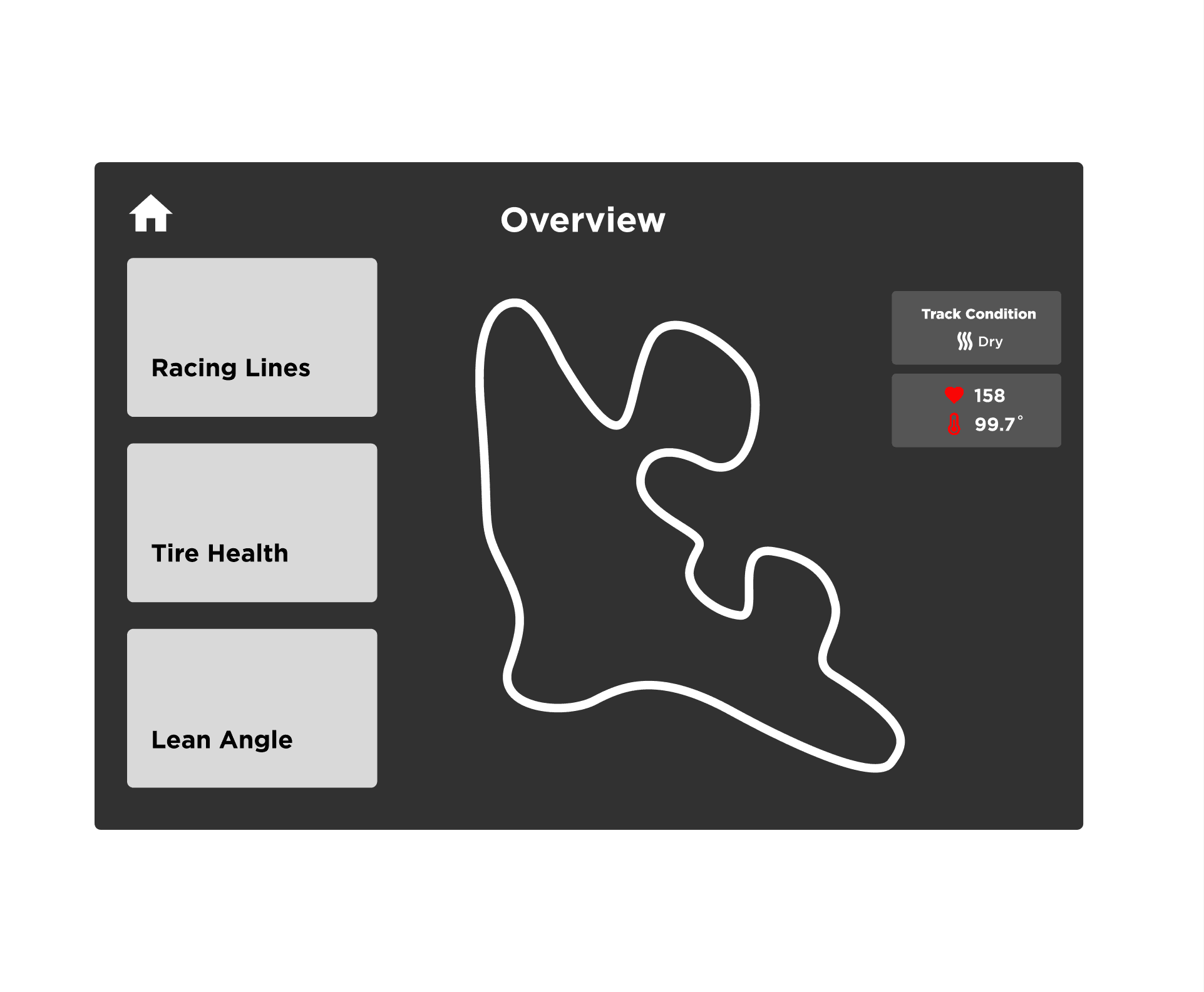
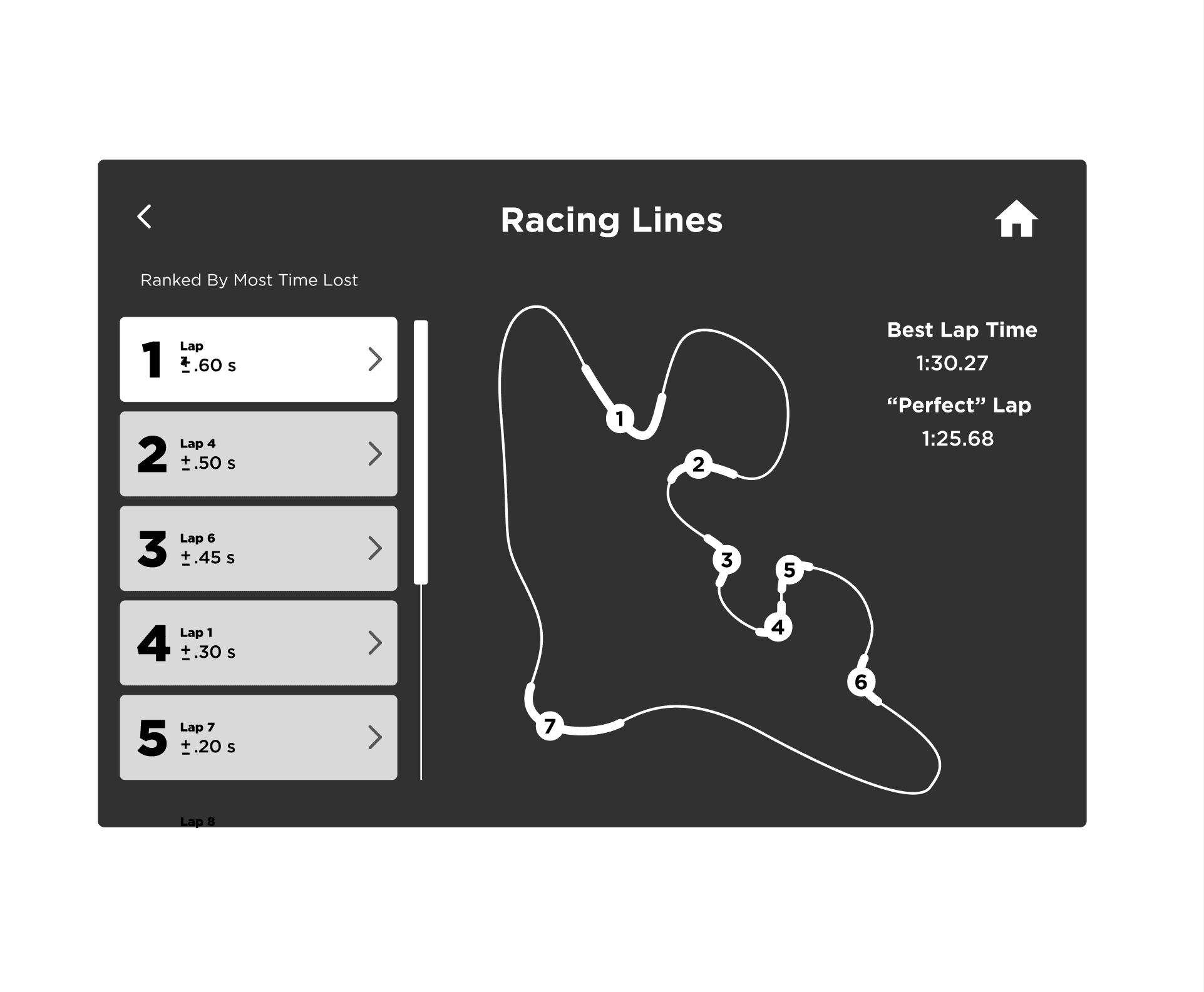
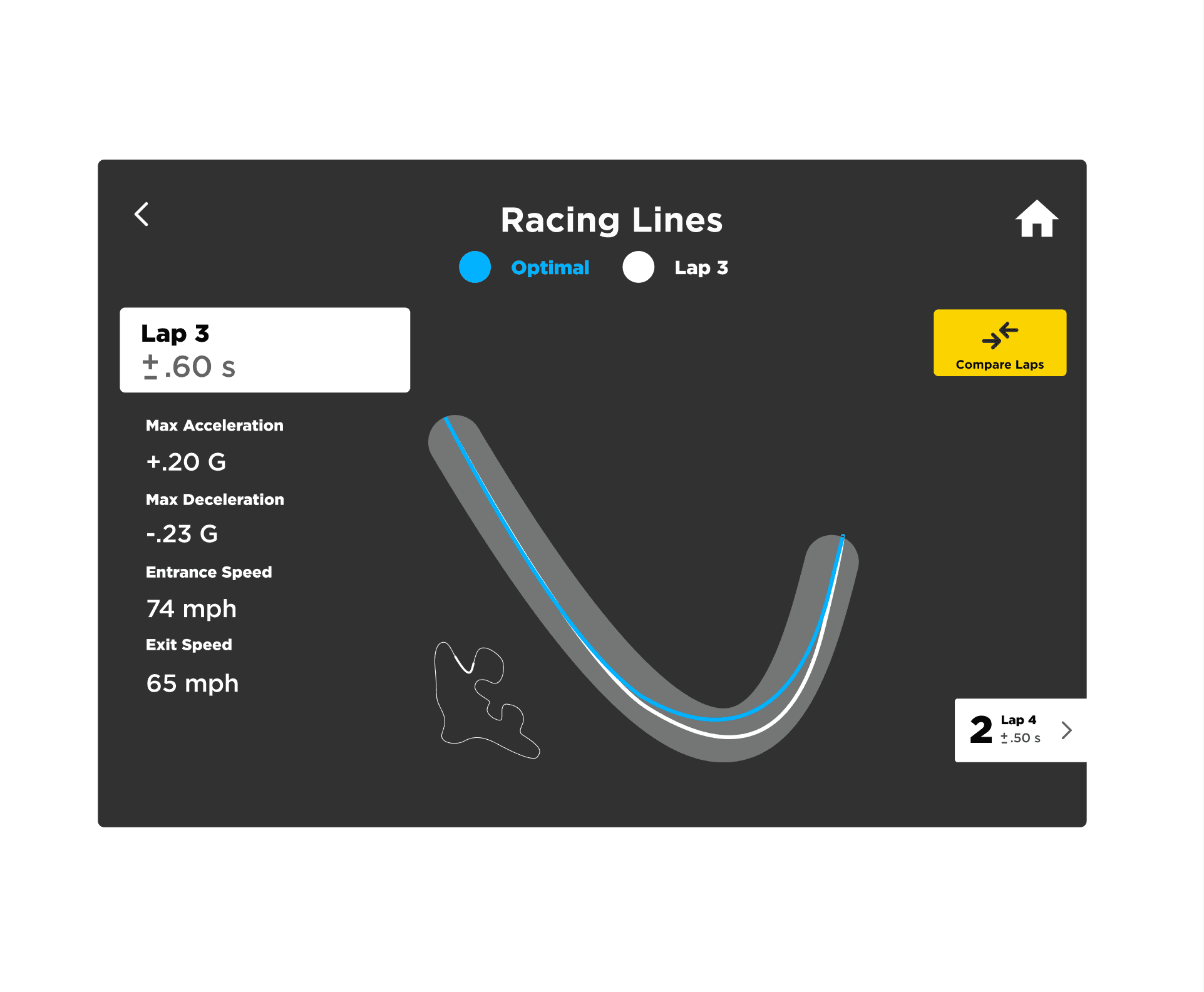
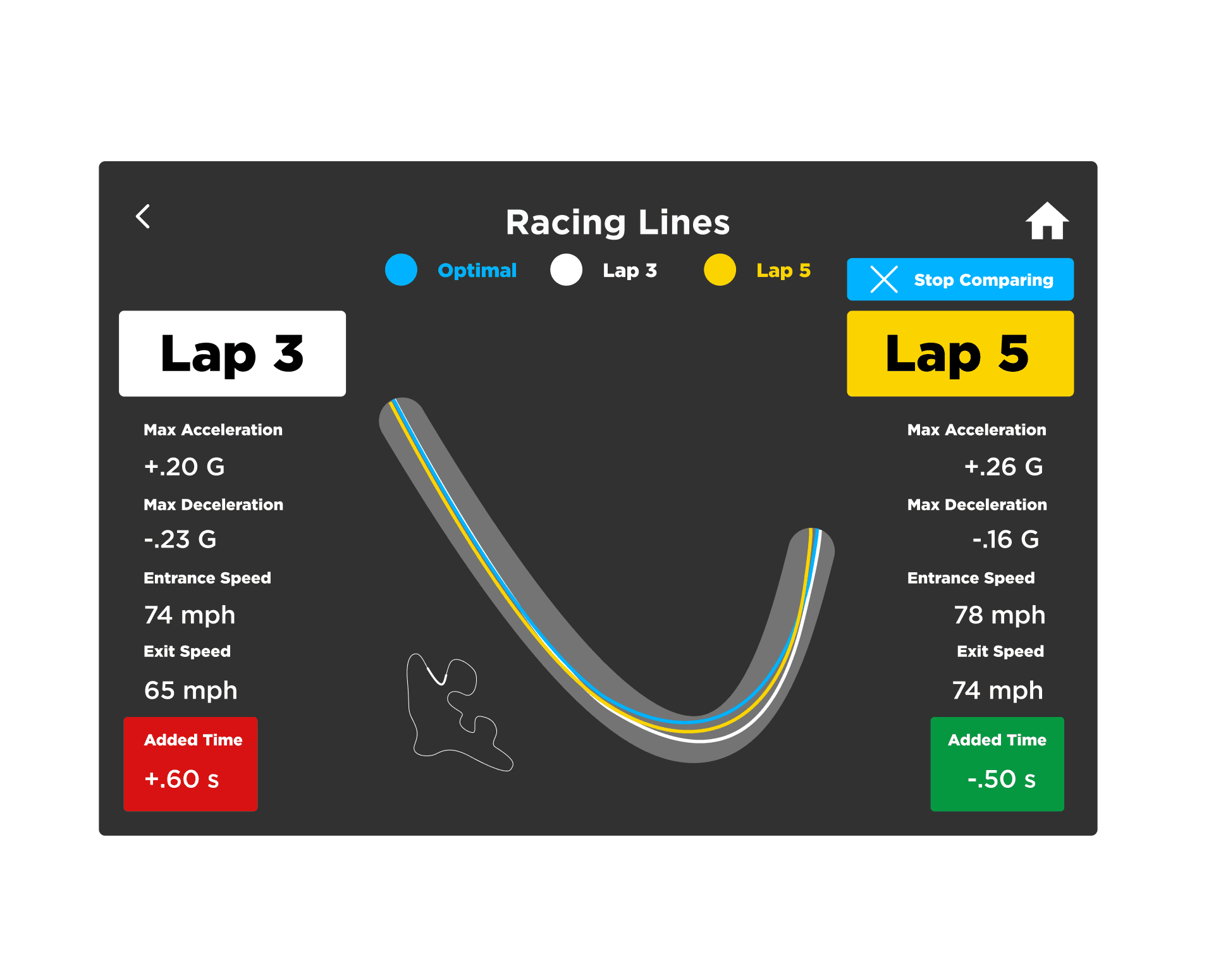
Third Ideations:
With a slight change in the width of the screen, I mocked them up on a TFT device to get a feel for the dimensions of the screen and the physical device while also finding a good alert system for the drivers when racing. Some other things I focused on:
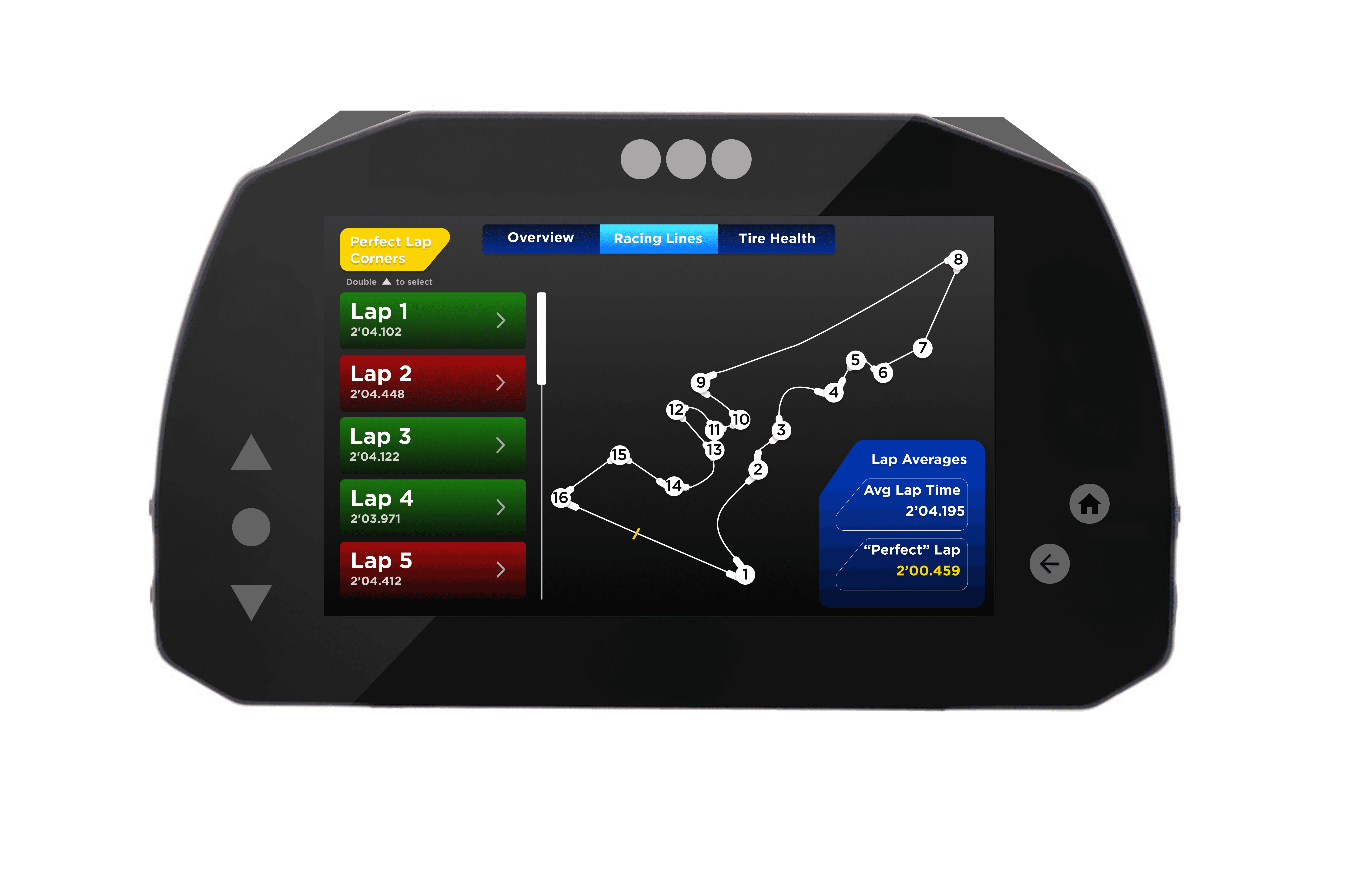
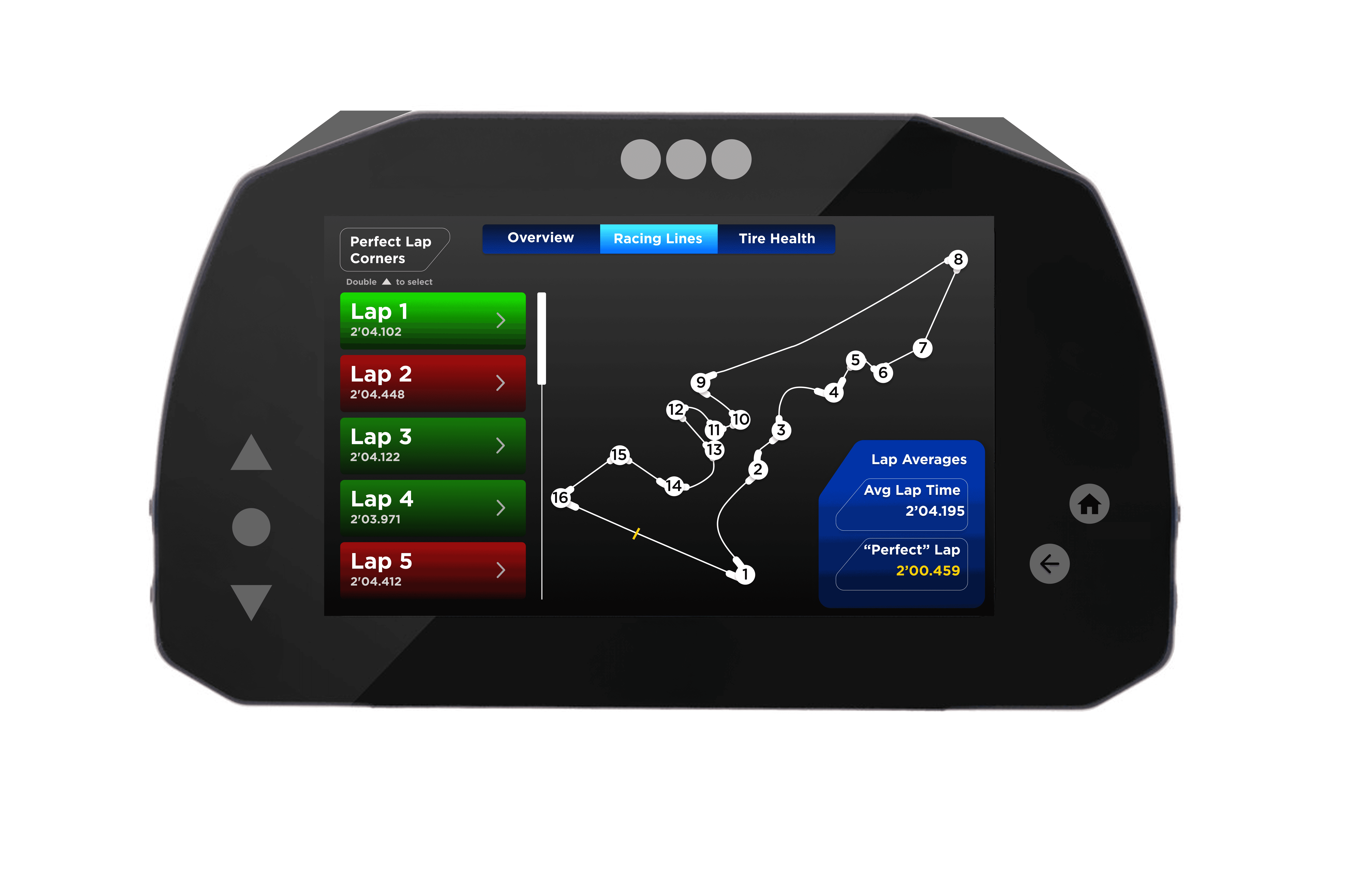
Info Page Tabs on Top of Screen: All based on the idea of being able to press trigger buttons on the TFT device itself to switch seamlessly across categories and review personal statistics
More Emphasis on Tire Health: A visual depiction of the tire's health through temperature tracking and air pressure to understand where in the race their tires fought the hardest
Adding Depth to Buttons: A more cohesive color system that adds contrast for more efficient readability
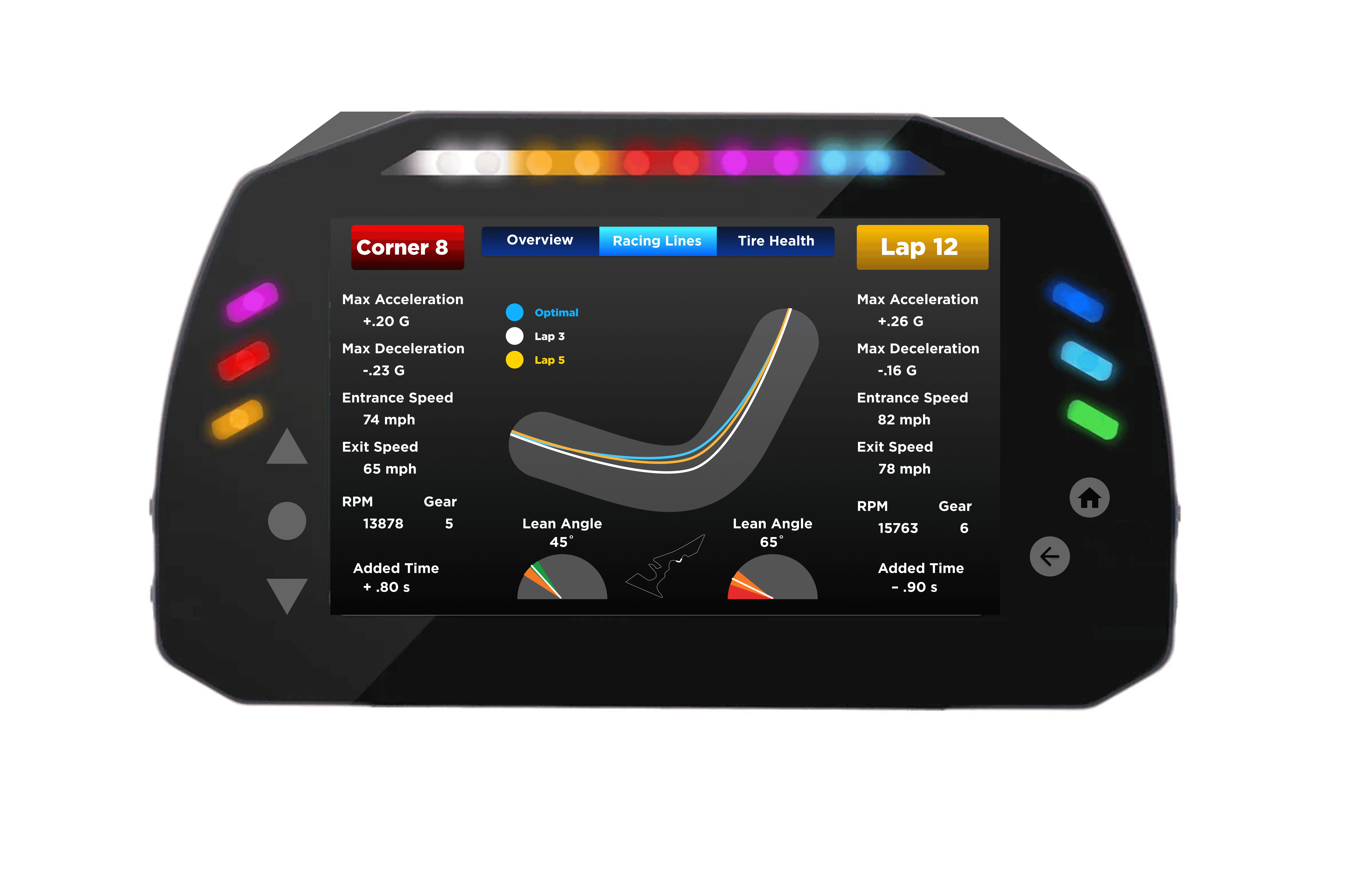
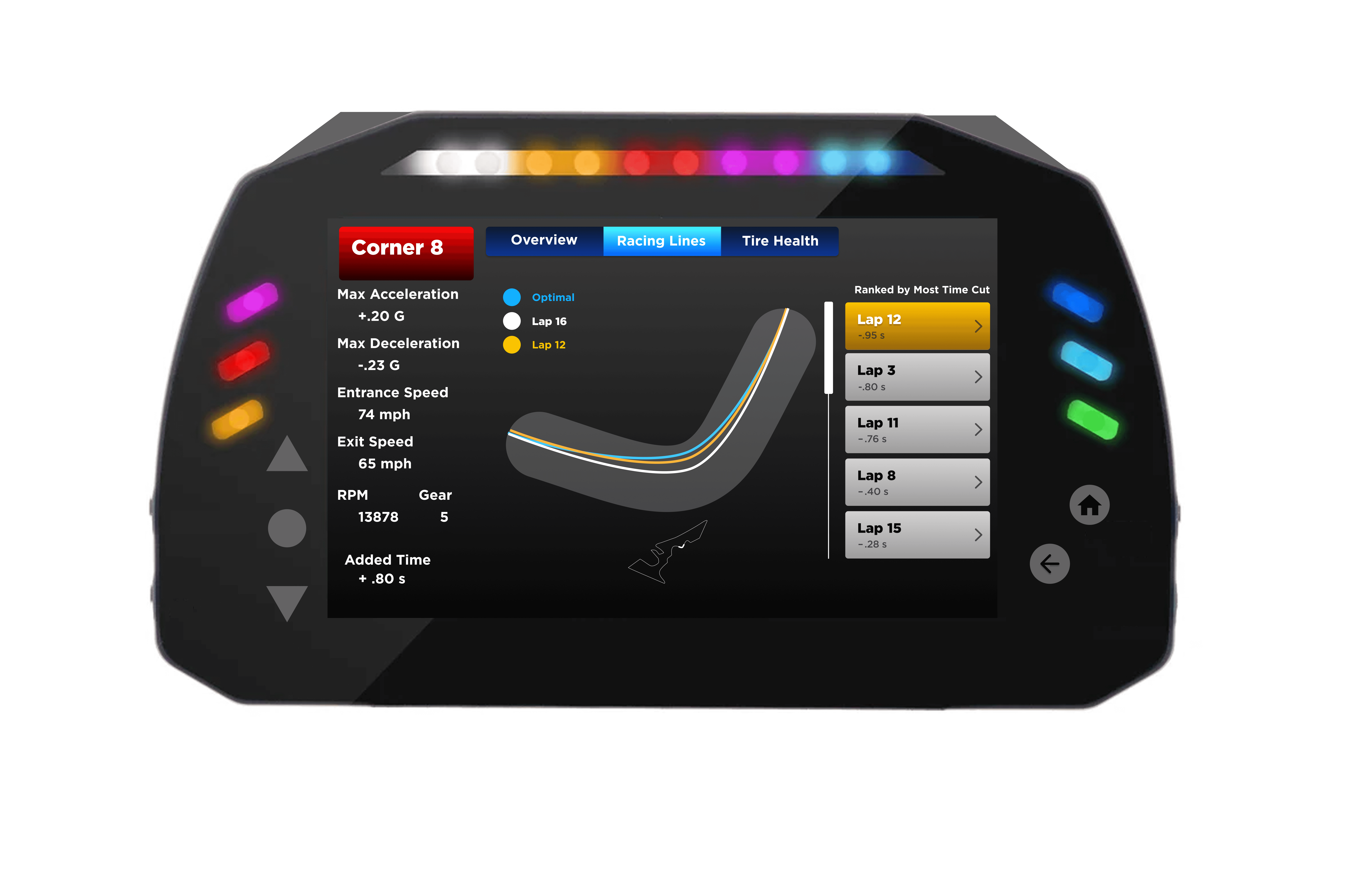
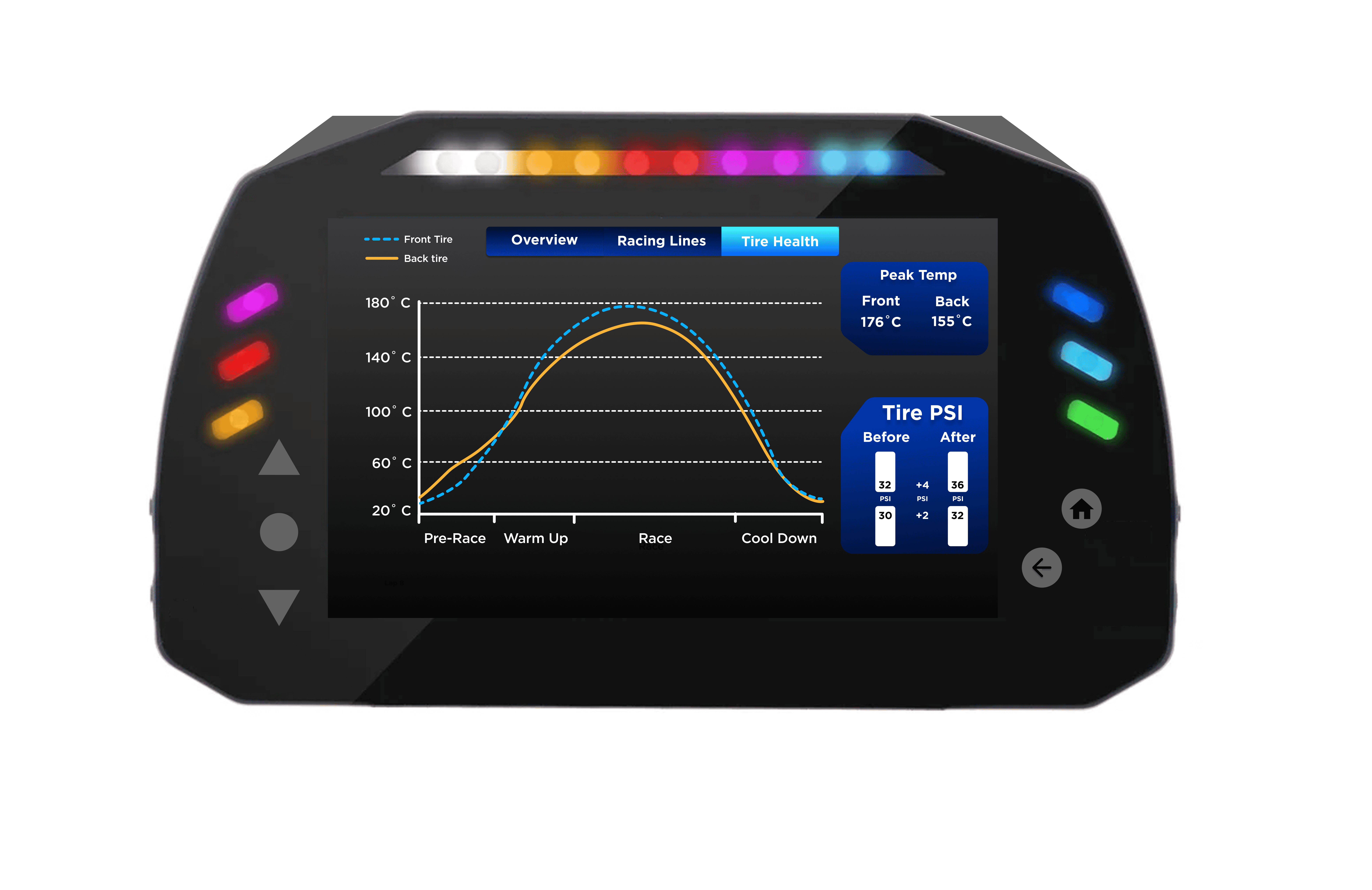
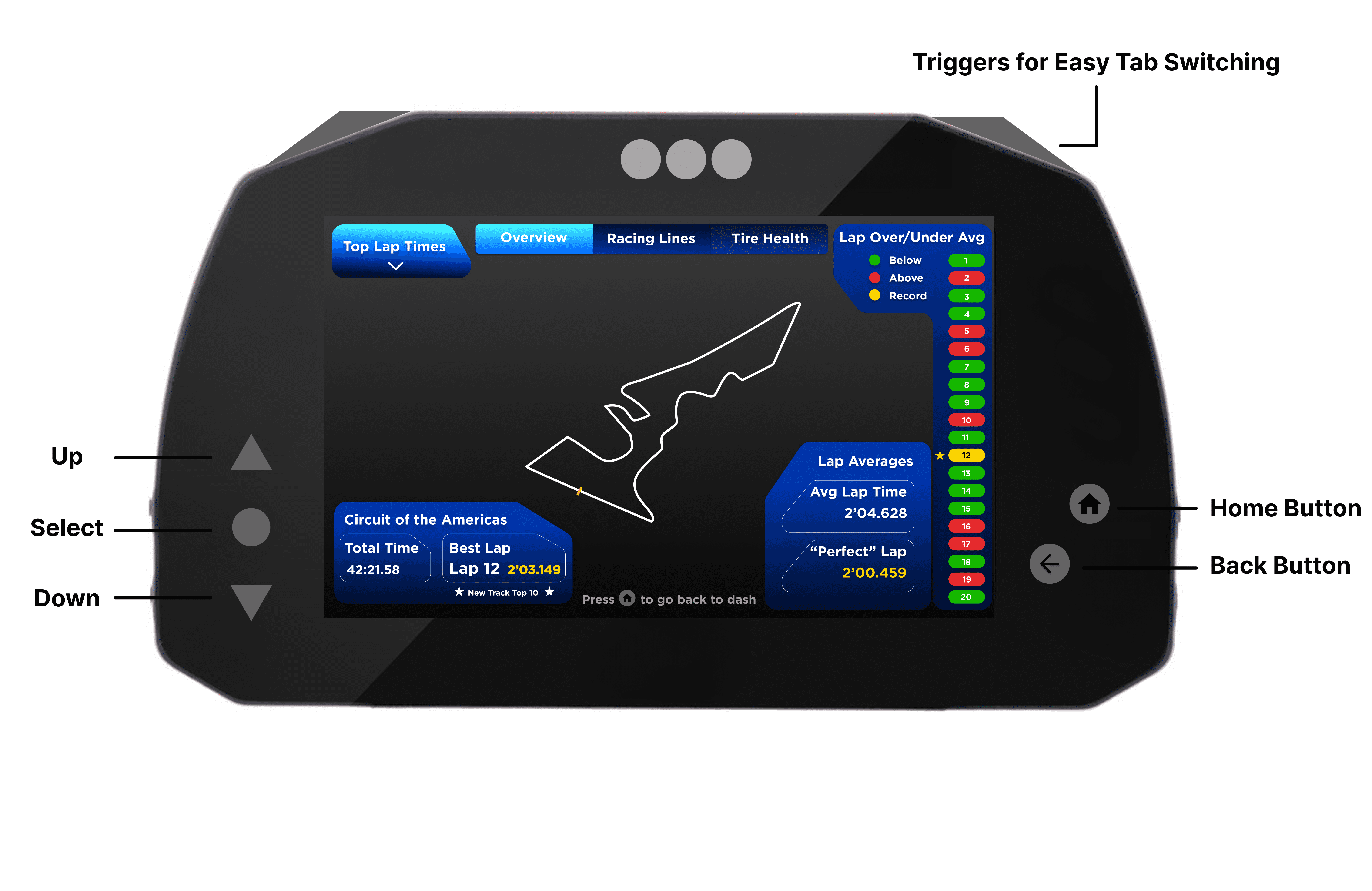
Key Features
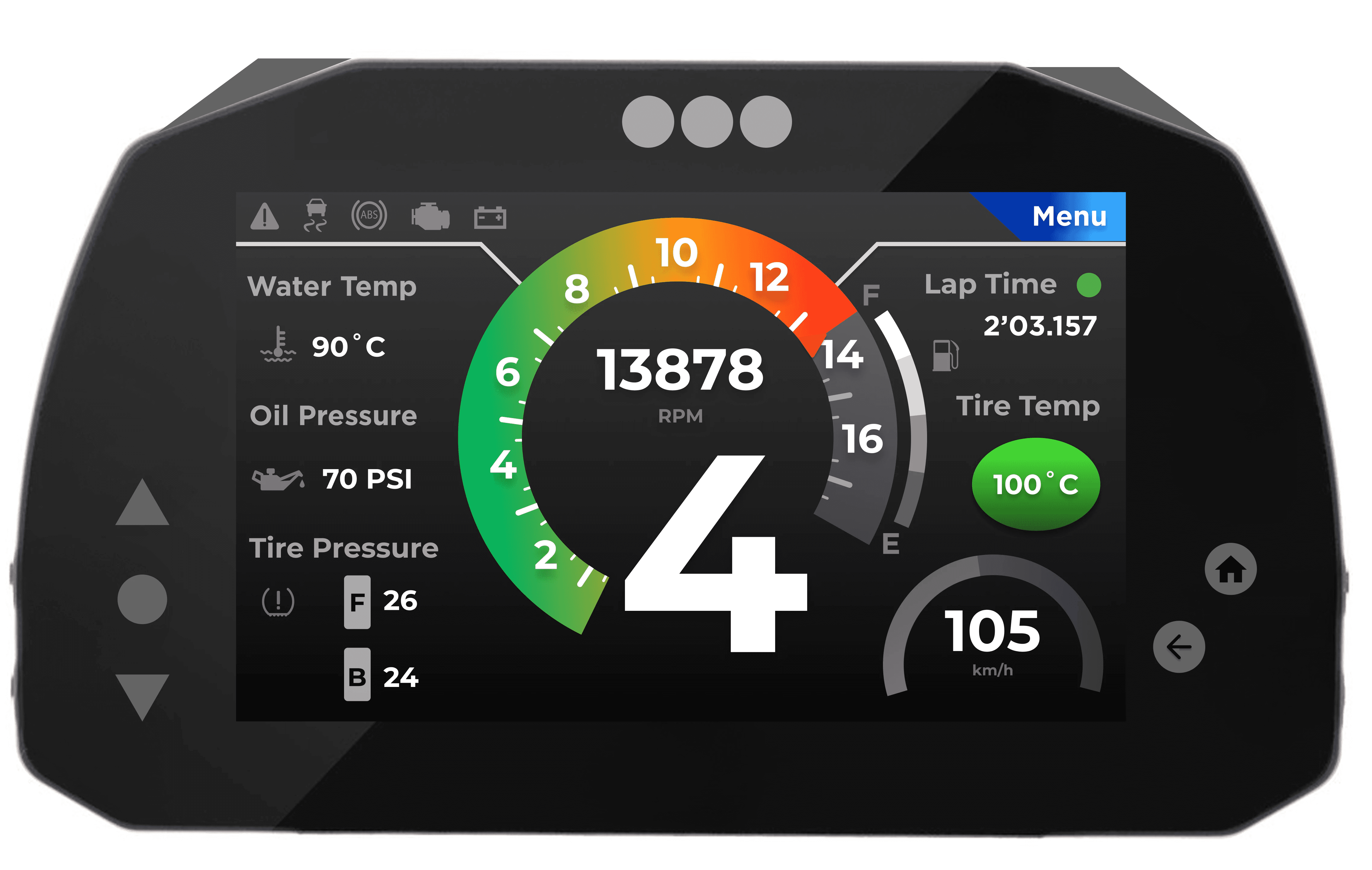
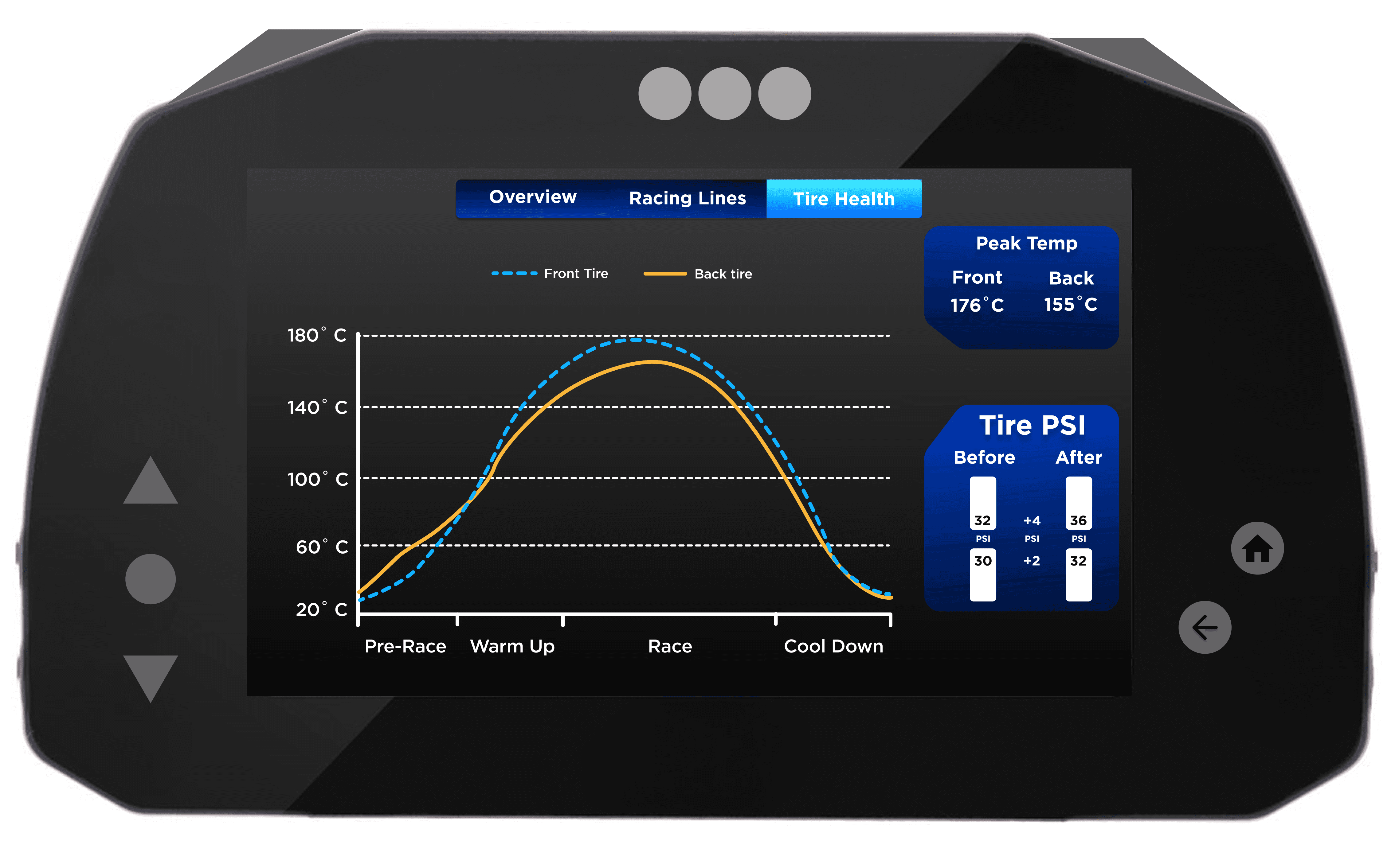
Continuous monitoring of tire temperature and pressure is critical for both performance and rider safety, while post-race data provides valuable insights for evaluation